Colorado doesn’t get an unusual amount of lightning. It gets an unusual number of people standing under it.
The National Weather Service office in Pueblo keeps a lightning resource page for the whole state. Two of its numbers sit oddly next to each other.
Colorado ranks 3rd in the nation for lightning deaths from 2006 through 2024, behind only Texas and Florida. On flash density, the amount of lightning per square kilometer, it ranks 32nd.
That gap is the whole story for a runner.
The sky here isn’t more dangerous than Florida’s. The habit of being outside at 2 p.m. in July is.
Here’s what the casualty records say about when that habit costs people, and how to run around it.
Third in the nation, with an ordinary sky
Colorado averages about 500,000 cloud-to-ground flashes a year, according to the NWS Pueblo ranking page, from the US National Weather Service. That’s 4.8 flashes per square kilometer, 32nd in the nation for density and 19th for raw count.
Deaths tell a different story.
Since 1980, lightning has killed 101 people in Colorado and injured 490, per the NWS casualty charts. The same office puts the long-run state average at 2 deaths and 12 injuries a year.
The reason is exposure, not weather. A state where hiking, fishing and running are the default weekend puts more people on open ground in storm season.
El Paso County, home to Colorado Springs and Pikes Peak, has recorded more lightning casualties than any other county. The foothills counties along the Front Range follow close behind.
The two hours that do most of the damage
The NWS charts break every Colorado casualty since 1980 down by hour. The shape isn’t subtle.
Casualties climb from noon, peak at 2 p.m., and stay high through 5 p.m. Before 10 a.m. the chart is nearly empty. After 8 p.m. it is empty again.
The national pattern matches. Two out of three U.S. lightning deaths happen between noon and 6 p.m., according to the CDC, America’s public health agency, most of them in summer and especially July.
Before 10 a.m. the chart is nearly empty. After 8 p.m. it is empty again.
Colorado’s monthly chart says the same thing from the other direction. July alone accounts for more than a third of the state’s lightning deaths since 1980. June and August sit on either side of it, and September drops off sharply.
For a runner, that marks out a very specific window of risk. A summer lunch run, or a weekend trail run that starts at 10 and peaks at 1, sits in the middle of it.
Runners are in the data, not just hikers
It’s tempting to think of lightning as a hiker’s problem. The national record says otherwise.
The National Lightning Safety Council’s analysis of every U.S. lightning death from 2006 through 2024 counted 492 fatalities. About two thirds were people at leisure outdoors.
Within the sports category, golf led at 33% and soccer at 31%. Running was third, at 24% of all sports-related lightning deaths. Baseball, football and disc golf made up the rest.
The report’s note on those runners is the part that’s worth reading twice.
Several were some distance from safety. They could have reached shelter sooner had they checked the forecast and picked a different route.
Not a rare accident, then. A route choice and a start time.
More than 72% of all the deaths in that study fell in June, July and August. Males accounted for 80% of them.
Why the foothills are the wrong place at 1 p.m.
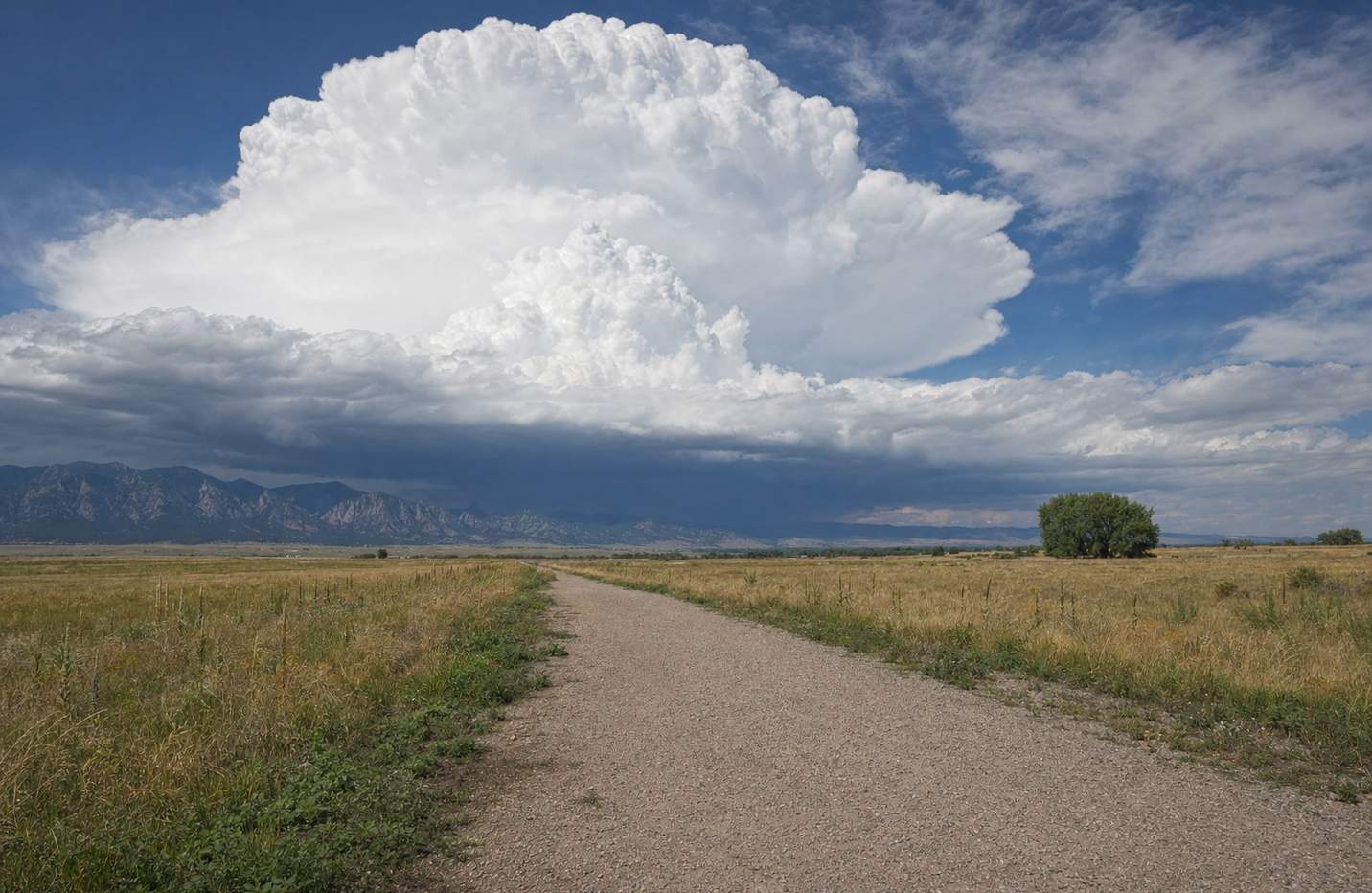
The NWS puts it plainly in its outdoor safety guidance. In mountainous areas, thunderstorms typically build in the early afternoon, so hike early and be down the mountain by noon.
The same advice holds for a run that climbs.
The terrain that makes a trail run hard is also the terrain with nowhere to go.
A ridge, an open mesa, or a reservoir shoreline offers no shelter at all, and a lone tree is worse than open ground. The NWS lists isolated trees, hilltops, ridgelines and open water as the places to leave immediately.
A city park with buildings and parked cars nearby is a different situation.
The rules that actually apply to a run
Three numbers from the NWS settle most decisions before they get complicated.
- Lightning can strike about 10 miles out from a storm, per the NWS lightning science page. Thunder carries roughly the same distance, so if you can hear it, you’re inside the range.
- Thunder travels about a mile every 5 seconds. Counting from flash to rumble tells you how close the last strike was. Any count at all means the run is over.
- Wait 30 minutes after the last thunder before going back out, per the NWS outdoor guidance. A gap in the rain is not a gap in the lightning.
One more fact changes how you treat a strike. Almost 90% of people struck by lightning survive, according to the CDC.
Somebody down after a flash needs CPR and a call for help, not caution about touching them.
Two things the NWS says don’t work: crouching in the open, and lying flat. Both leave you outside.
Keep moving toward a building or a hard-topped vehicle. If you’re in a group, spread out.
Planning a Denver summer around it
None of this argues for running less. It argues for moving it.
- Finish hard summer efforts before noon, and trail climbs earlier still. The casualty chart is nearly blank before 10 a.m.
- Read the afternoon forecast the night before, not the morning of. A day with storms expected by 1 p.m. is a 6 a.m. run or an evening run after 8. Not a lunch run.
- Pick summer routes with an exit. The park loops in where to run in Denver mostly have shelter within a few minutes. The foothills routes in trail running near Denver mostly don’t.
- Treat the first rumble as the finish line. Not the first drops, and not the second rumble.
- Race by the calendar. Colorado’s lightning deaths fall away after August, one more reason the fall race season is the friendly one.
The heat and the sun already push summer running in Denver toward the early morning. The lightning data says the same hours, for a harder reason.
Colorado isn’t dangerous because of its sky. It’s third in the nation because people are out under that sky at 2 p.m. in July, and a runner can choose otherwise.