
For a big city, Denver is an easy place to run. The grid is flat, the parks are generous, and there are miles of paved trail you can run without crossing a road.
The trick is matching the route to the run you want. A recovery jog, a long steady effort, and a hill workout all live in different parts of the city.
Here’s how the running splits up.
Flat park loops for easy miles
The park loops are the heart of Denver running. Flat, social, and easy to measure in repeats.
- Washington Park (“Wash Park”) is the classic. A flat perimeter loop of a bit over two miles around two lakes, busy with runners at almost any hour.
- City Park is bigger and a little quieter, with open sightlines, Ferril Lake, and the mountains on the skyline. Dead flat.
- Sloan’s Lake on the west side gives you a flat loop right around the water, with some of the best mountain views in the city.
Pick a park loop when you want easy, repeatable miles without thinking about navigation or traffic.
Pick a race by the season and the scene, not just the distance.
Long paved trails for distance
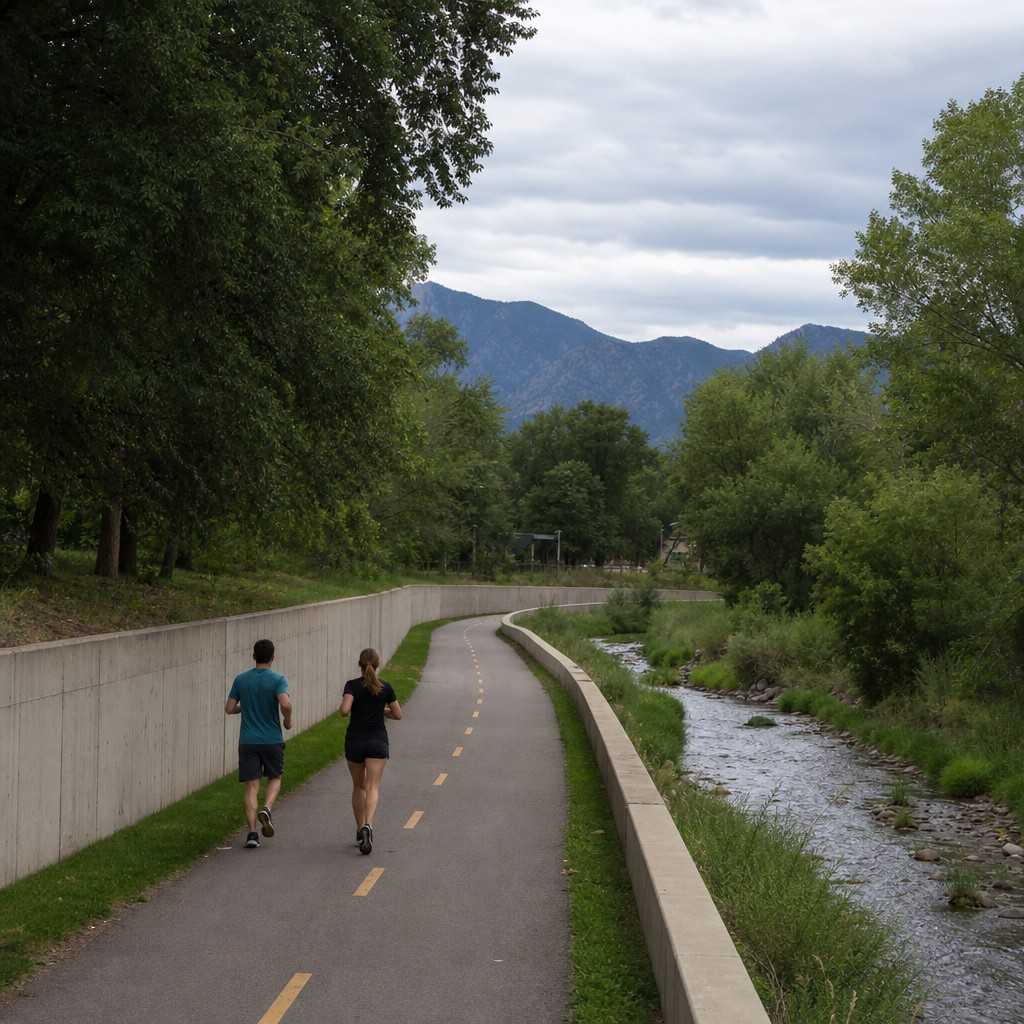
When you want to run long without stopping, Denver’s trail network is the answer. These are paved, mostly car-free, and go on for miles.
- The Cherry Creek Trail runs from downtown out to the southeast for many continuous miles along the creek, dropped below street level for long stretches so you rarely meet a road.
- The South Platte River Trail follows the river through the city and links up with other paths at Confluence Park, the spot where Denver’s running and biking trails knot together.
- The High Line Canal is a long, winding, soft-surface path that threads through the metro for dozens of miles, shadier and more rural-feeling than the creek trails.
These are where long runs and marathon training live. Start anywhere, run out, and turn around when you’ve had half your distance.
Hills and trails, a short drive west
Denver itself is flat, which is great for easy days and bad for hill strength. For climbing, you look west.
The foothills start just past the western suburbs, and the trails there trade smooth pavement for real dirt and real elevation gain. They’re a different sport from a park loop: rockier, steeper, and higher, so your altitude math gets harder again.
Save the foothills for when you specifically want hills or trail, and treat the effort as its own thing. When you are ready to head up, trail running near Denver covers getting started in the foothills. Train for the course you’ll run: hills, trail, and thin air are three different problems.
Running the city safely and comfortably
A few things make Denver running easier whatever route you pick.
- Carry water on anything long. The dry air dehydrates you faster than you expect, and the trails have fewer fountains than you’d like.
- Start early in summer. Mornings are cool and calm; afternoons bring heat and the occasional thunderstorm rolling off the mountains.
- Dress for a swing. The temperature between a shaded dawn start and a sunny finish can be dramatic.
The takeaway
Denver gives you flat park loops for easy days, long paved trails for distance, and the foothills for hills, all in one city.
Match the route to the run, carry more water than you think, and run early when it’s hot. New to the altitude that makes all of this feel harder than the map suggests? Start with running at altitude in Denver, or if you’ve just arrived, your first month running in Denver.