Booking a flight for a Denver race raises a question sea-level runners rarely ask.
How many days before the start line should you actually land?
There are two workable plans for handling Denver’s altitude before a race. You either give your body real time to adjust to Denver’s altitude.
Or you accept the thin air as it is and race close to arrival.
The research speaks clearly to those two ends. A few days in between is less studied, and buys only partial adjustment.
Here’s what the research actually supports for each plan.
The two-week plan
Give the body enough runway and it adjusts to elevation in real, measurable stages, not all at once.
A 2018 narrative review in Frontiers in Physiology, by Burtscher and colleagues, looked at how endurance athletes should time travel to altitude competitions.
The guidance for moderate altitude, roughly 2,000 to 3,000 meters, is at least two weeks of acclimatization before racing.
That’s the window the review found necessary for the main physiological adjustments to settle in.
Denver sits just below that band, at 1,609 meters.
So two weeks is the generous, conservative end for a mile-high race, not a strict requirement.
Two weeks is the plan for a runner willing to build a Denver trip around the race, not just around the finish line.
The same review adds a detail worth knowing if your trip is genuinely tight.
For runners who can only spare a day or two, it describes a different approach.
Arrive early enough to preview the course. Then sleep at a lower elevation, and return for the race itself.
It’s a logistics-heavy option, and most weekend travelers will skip it. But it shows the research treats early arrival on a spectrum, not a strict yes-or-no.
Two weeks is the plan for a runner willing to build a Denver trip around the race, not just around the finish line.
The late-arrival plan
Most visiting runners don’t have two weeks.
A long weekend is the more common reality.
A study on short-term arrival strategies for endurance exercise performance at moderate altitude tested a narrower question.
If you’re arriving right before a race anyway, does it matter whether you land the evening before or just a few hours before the gun?
It found no meaningful performance edge to delaying arrival. Runners who arrived only a few hours ahead did not perform better, or worse, than those who came in the evening before.
The researchers noted individual responses vary, but as a group there was no advantage to cutting it closer.
That result removes a common assumption: that showing up at the last possible minute somehow protects your legs from the thin air.
It doesn’t.
- If two weeks isn’t on the table, the evening before and a few hours before land in about the same place. Book the flight that fits your schedule, not the one you think spares your legs.
- A short-term arrival is a workable fallback, not the ideal. The two-week plan still produces a better-adjusted runner. Short-term arrival is what you do when two weeks isn’t available.
Your first 48 hours in Denver
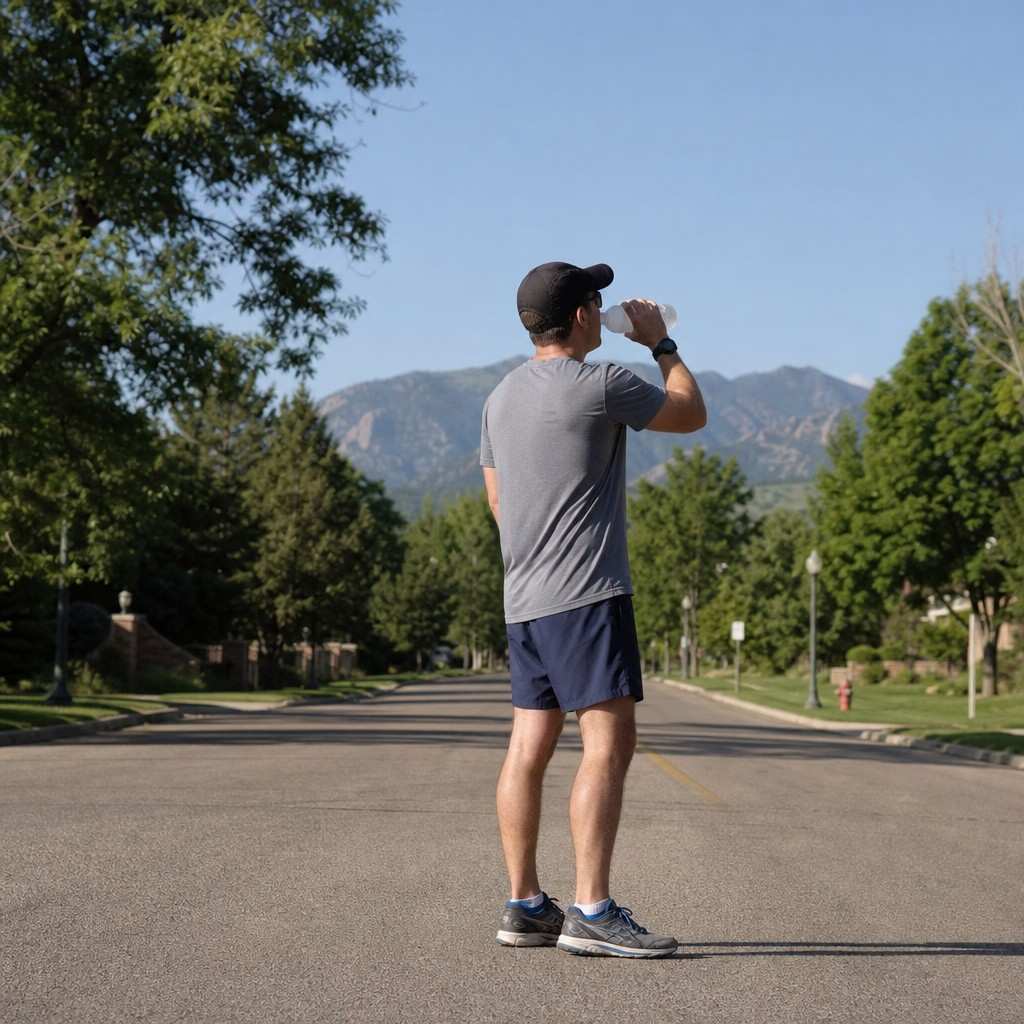
Whichever plan you pick, the first two days call for the same basics.
- Keep runs easy. This isn’t the time to test your legs against the elevation.
- Drink more water than feels necessary. Denver’s air is dry as well as thin, and the hydration guidance for running at altitude applies even more in your first days here.
- Protect your sleep. Altitude can disrupt sleep in the first nights, and a bad night before a race compounds the elevation hit.
- Go easy on alcohol. It adds to both the dehydration and the sleep disruption the altitude is already causing you.
- Race by effort, not pace. This is exactly when pacing by effort at altitude matters most, since you’ve had the least time to adjust.
Set your expectations honestly
The hit from Denver’s elevation is real, but it’s moderate, not severe.
For a healthy recreational runner, it’s a pacing problem, not an emergency.
It’s the kind that quietly slows a sea-level runner who expects their normal splits to show up on race morning.
Denver’s altitude changes how every race feels; pace by effort, not your sea-level numbers.
Weather is the other adjustment a visitor underestimates.
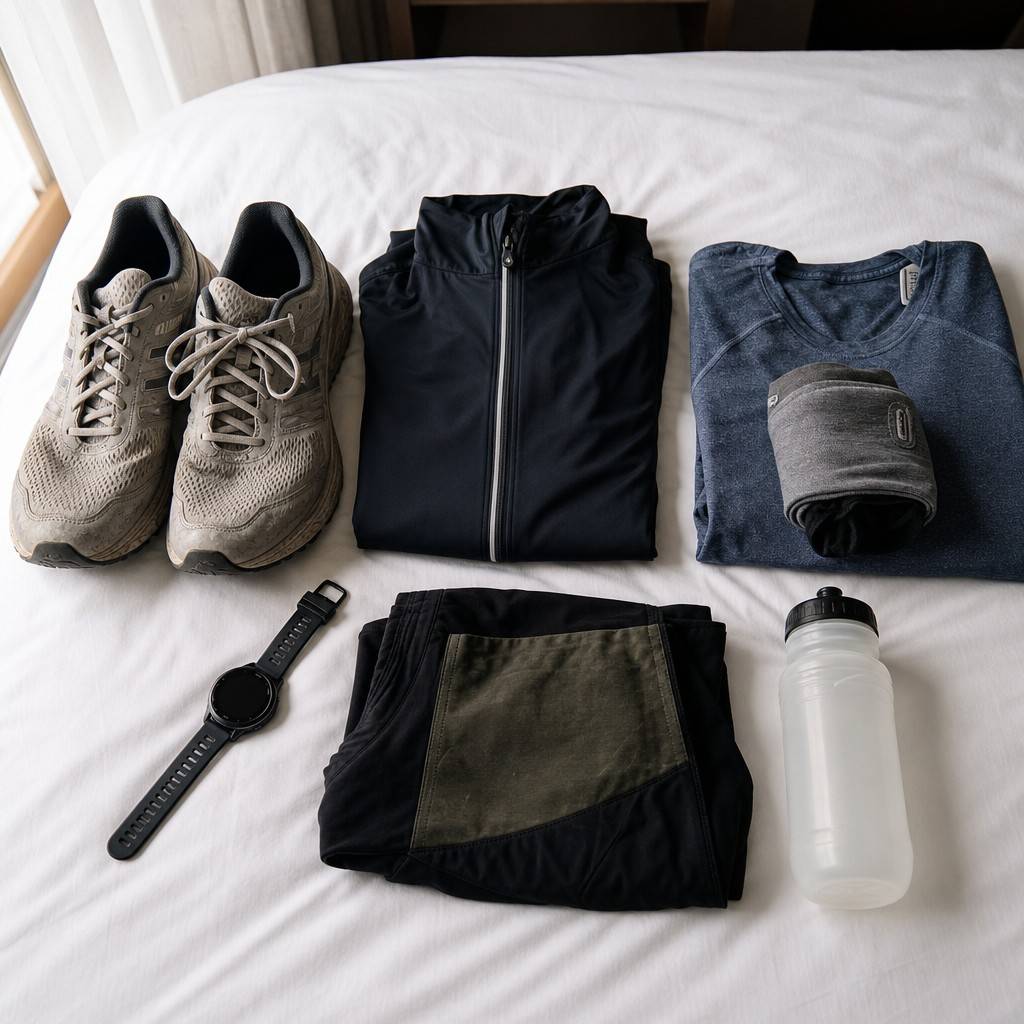
A cool, clear Denver morning can swing hard by the time you’re at the finish, so layer for the gun, not the afternoon.
Whichever race is on your calendar, check the current Front Range race guides before you book flights.
Knowing the course and start time will tell you which of these two plans actually fits your trip.
Booking the trip
Two weeks gives your body real time to adjust before the gun.
A late arrival, timed the evening before or a few hours out, is a legitimate fallback when two weeks isn’t possible.
The days in between are simply less studied, so they buy you less certainty.
Pick one of the two plans, then run your first Denver miles easy, hydrated, and by effort.