
Colorado’s air is two things at once: high and dry. Both of those facts affect how much water you lose on a run, and they work together in ways that catch people off guard, especially runners who moved here from wetter climates.
The combination of dry air and altitude means you lose fluid faster than you would for the same effort at sea level, in every season. The mechanism is simple once you know it.
Two reasons you lose water faster up here
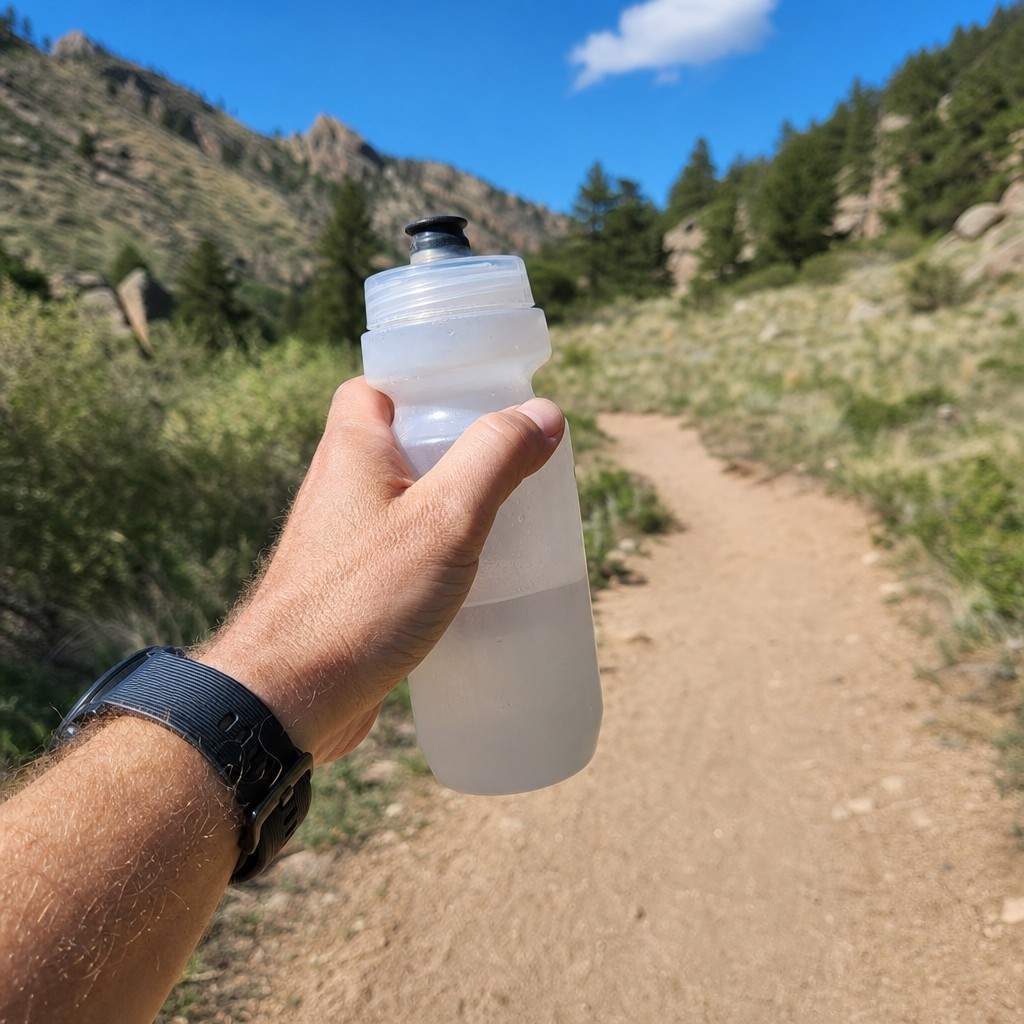
The first reason is the dry air. When you sweat in humidity, the moisture clings to your skin. You feel wet, you feel the cooling effect, and your body signals that you’re working hard. In Colorado’s low-humidity air, sweat evaporates almost as fast as it forms. You don’t feel damp. You don’t feel like you’re losing much.
You are. You just can’t feel it.
The second reason is the altitude itself. Running at a mile up means breathing harder than you would for the same effort at sea level, as the article on running at altitude in Denver explains. More breaths per minute means more water vapor exhaled with each one. Exercise-physiology sources note that respiratory water loss increases with both exertion and elevation.
The combination of dry air and altitude means you lose fluid faster than you would for the same effort at sea level, in every season.
Put both together and you have a fluid-loss rate that quietly outpaces a sea-level runner’s expectations, before you’ve had a chance to register feeling thirsty.
Winter is the sneaky season
Summer gets the hydration warnings, but winter may actually be the more dangerous season for underestimating fluid loss.
Cold, dry air holds very little moisture. Every exhale in a Colorado winter carries water vapor out of your body, and the cold suppresses your thirst signal. You’re not sweating visibly. You’re not overheating. And yet, exercise-physiology research on cold-weather exertion generally finds that people arrive at the end of a cold run measurably dehydrated because the respiratory and skin losses were ongoing and invisible throughout.
If you finish a cold run and don’t feel like drinking, drink anyway. Thirst is an unreliable gauge at altitude in any season, but especially in winter.
The practical approach
You don’t need to become obsessive about water, but you do need a consistent routine.
- Drink before you head out. Starting a run already slightly dehydrated is common and preventable. A glass or two of water before you lace up costs nothing.
- Carry water on anything over 45 minutes. For shorter, easy runs, a normal pre-run drink is usually fine. Once you’re out for longer, carry something, especially on routes with limited access to fountains.
- Rehydrate after every run, not just the hard ones. The losses accumulate across the week. Consistent post-run hydration matters more than any single heroic effort.
For hot and long summer efforts, the hydration demands increase further, which the guide to summer running in Denver covers alongside heat and storm timing. A plain handheld bottle covers most runs, and you can compare handheld running water bottles on Amazon. (Some links on this page are affiliate links; if you buy through them, Feat on the Street may earn a small commission at no extra cost to you. More in our affiliate disclosure.)
Electrolytes: when they matter and when they don’t
Electrolytes are worth thinking about on long or hot efforts, not on every short run. When you’re out for an hour or more, or sweating heavily in summer heat, sodium and other electrolytes leave with the fluid. Replacing water alone at that point can dilute what’s already in your system.
A sports drink, electrolyte tablet, or a salty snack after a long run does the job. For a 30-minute easy run on a mild morning, plain water is fine. Sports-science guidance on altitude running generally reserves the electrolyte emphasis for efforts where substantial sweat losses occur.
Signs you’re behind on fluids
Three reliable flags:
- A headache after a run that doesn’t have an obvious other cause.
- Unusual fatigue that doesn’t match the effort you put in.
- Dark urine after a run. Pale yellow is a reasonable target; anything darker is a signal to drink more.
These signs show up on any run, but at altitude they tend to appear sooner and with less obvious cause than runners expect from their sea-level experience. If you’re also new to Denver, understanding the broader altitude adjustment helps put these signals in context, and how to start running in Denver walks through the acclimatization arc for newer runners.
Don’t overdo it either
More is not infinitely better. Drinking too much plain water during or after a long run can dilute sodium levels in the blood, which is uncomfortable and in serious cases harmful. The goal is to replace what you’ve lost, not to drink beyond it.
Listen to thirst as a floor, not a ceiling, and use the post-run urine check as your honest feedback. At altitude, the floor is higher than you’re used to. That’s the adjustment.
Train for the course you’ll run: hills, trail, and thin air are three different problems. Hydration is the piece of that equation most runners underestimate until it bites them on a long run they thought they were ready for.
Denver’s altitude changes how every race feels; pace by effort, not your sea-level numbers. Hydration is part of that recalibration: the numbers that worked at lower elevation don’t translate directly up here, and the sooner you build a routine around that, the better your runs will feel.