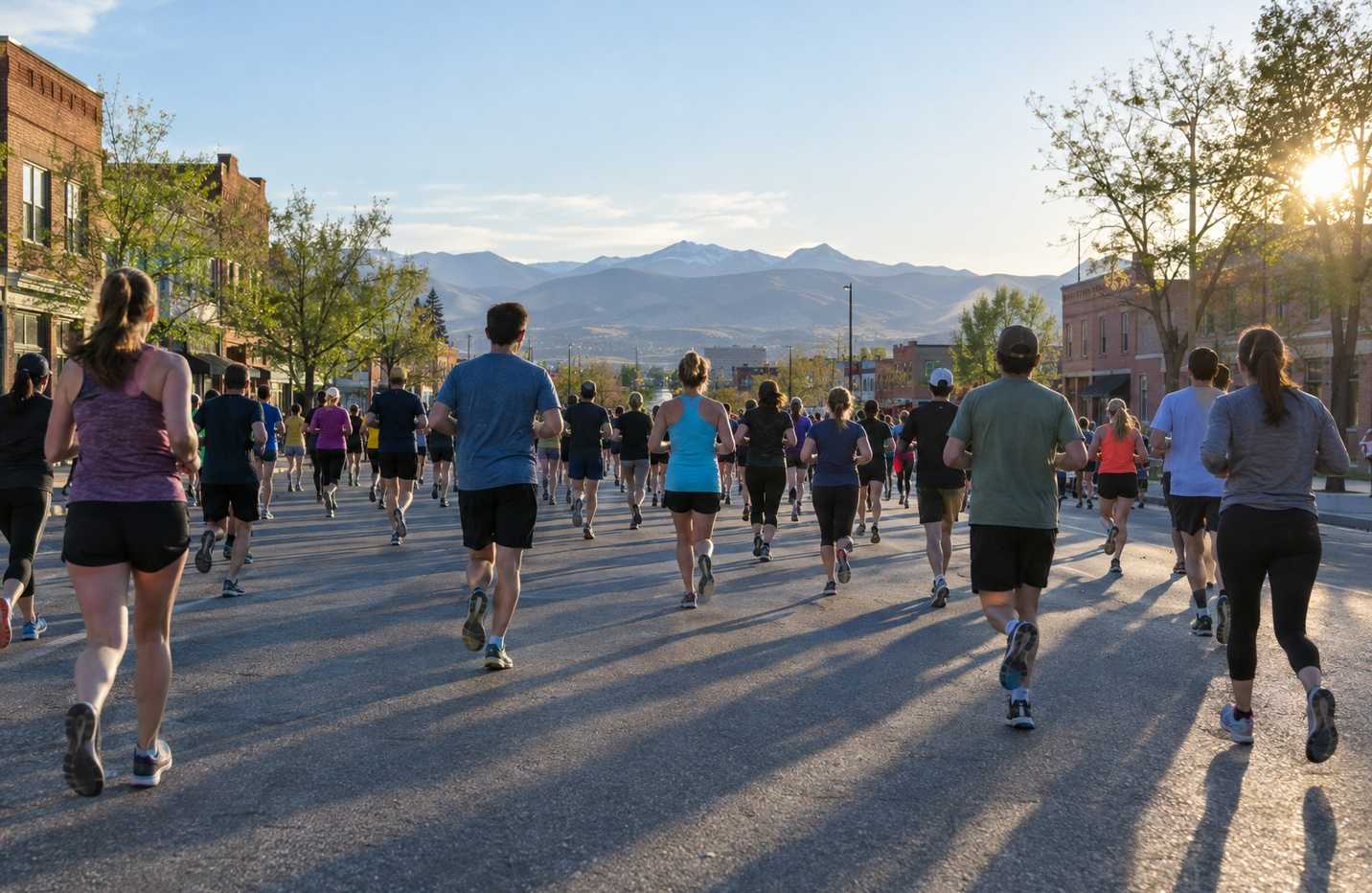
For most runners, yes. The Colfax Marathon is a big, well-supported road race through Denver, with no mountain climbing and a simple course shape.
The condition is the air. The whole course sits around a mile above sea level, and that changes what a sensible goal looks like.
A runner who lives and trains in Denver can treat Colfax like any big-city marathon. A runner flying in from sea level should race it on effort and let the finishing time be whatever it is.
Everything else is planning: which of the weekend’s races to enter, how the course is built, and what May weather does on race morning.
Four races, one finish line
Colfax is a race weekend, not a single race.
The organizer lists the 2027 weekend as May 14 to 16, with an expo on Friday and Saturday and the long races on Sunday.
All four Sunday races finish in City Park:
- The marathon, 26.2 miles, which the organizer lists as a Boston Marathon qualifier.
- The half marathon, which spends a full mile inside Denver Zoo.
- The Urban 10 Miler, the last 10 miles of the marathon course, starting later in the morning.
- The marathon relay, the full 26.2 miles split across a team of five.
For a runner whose longest race so far is a half, the Urban 10 Miler is an honest middle step. It runs the marathon’s long downhill and its second stadium pass without the first 16 miles.
One rule surprises visitors.
There is no race-day packet pickup, so you collect your bib at the expo on Friday or Saturday.
The course in five sections
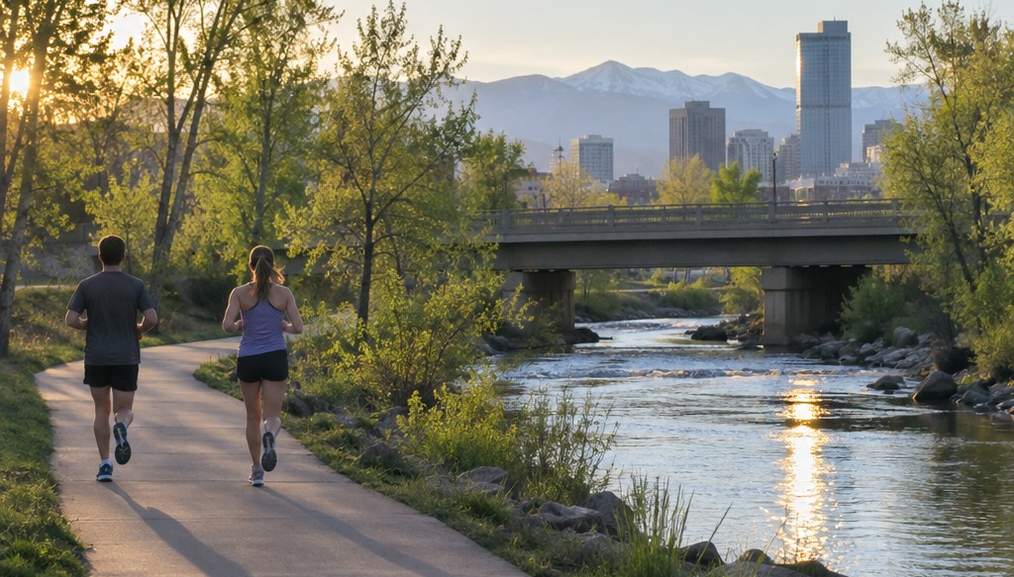
The organizer describes the marathon in five named sections, and reading them in order is the quickest way to plan a pace.
- Urban River, 6.5 miles. West on Colfax from City Park, past the Capitol and through Denver Fire Station #1. Then the Cherry Creek Trail and the first run through Empower Field at Mile High.
- Sloan’s Lake, 3.8 miles. A short climb out of the stadium, then a stretch around the lake that the organizer calls flat and fast.
- Eclectic Mile High, 5.9 miles. Further west on Colfax, into Lakewood and through the tree-lined Glens neighborhood.
- Screaming Downhill, 4.0 miles. Straight down Colfax from Lakewood back toward the stadium, with the skyline ahead.
- Downtown River Trek, 6.0 miles. The second stadium run, the Platte River and Cherry Creek Trail, then uphill on 17th Avenue into City Park.
Put those numbers together and the shape is clear.
The course heads west for about 16 miles, then turns back toward the finish on a 4-mile downhill.
That downhill is where a first marathon usually goes wrong. It arrives between roughly miles 16 and 20, it feels free, and it invites a pace the legs cannot hold later.
The final section then asks for the opposite. The climb up 17th Avenue comes in the last miles, when your legs are most tired.
The same outline also says where the good parts are. Around seven miles of the course follow rivers, lakes and bridges, which breaks up the long city stretches.
It arrives between roughly miles 16 and 20, it feels free, and it invites a pace the legs cannot hold later.
What a mile of altitude does to the plan
Thinner air holds less oxygen in every breath, so the same pace costs more effort in Denver than at sea level. That is the core of what running at altitude in Denver does to a race.
What that means for Colfax depends on one thing.
Where you live.
If you live here, you already train in this air. Your Denver training paces are your real paces, and the course needs no altitude adjustment beyond normal marathon caution.
Coming from sea level, you have two workable ways to arrive. The research behind both is laid out in when to arrive in Denver for a race.
- Arrive about two weeks early, which gives the body time for most of its adjustment.
- Arrive close to the race and run it without that adjustment, on effort rather than on pace.
The expo rule shapes the second plan. Since bibs are only handed out on Friday and Saturday, the latest workable arrival is Saturday, not race morning.
Either way, a sea-level runner should leave the watch’s pace screen out of the first half. Running by breathing and feel is the skill behind pacing by effort at altitude, and it matters most on the 16-mile outward leg.
May weather on race morning
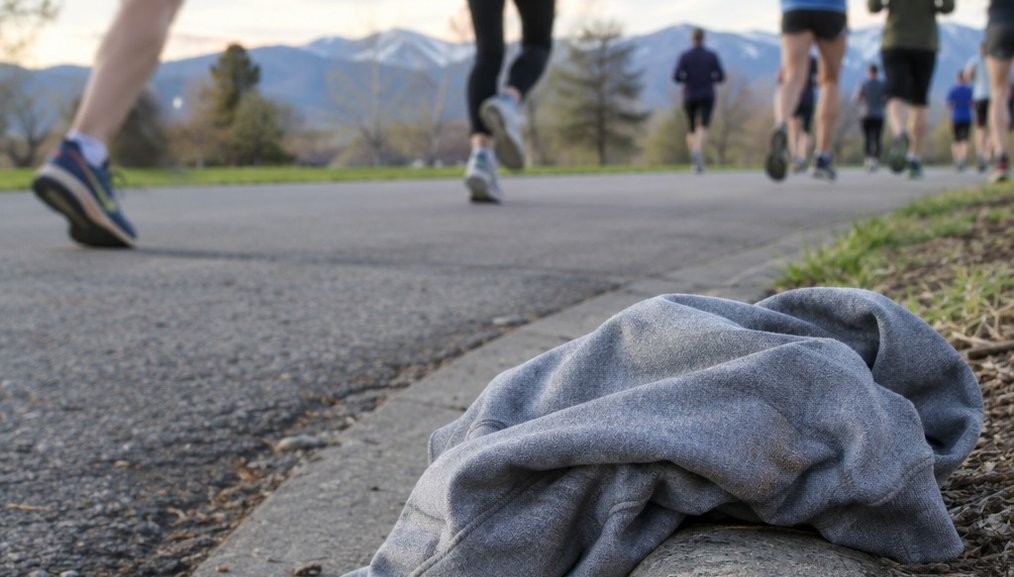
Denver’s May is mild on paper and changeable in practice. For May, the federal 1991 to 2020 climate normals for Denver International Airport give an average low of 43°F and an average high of 72°F.
The same record still shows 1.4 inches of snow for an average May. A cold, wet race morning is part of the normal range, not a rare exception.
The airport sits out on the plains, so read those figures as a guide rather than a City Park forecast. Big-city marathons start early, and race morning sits much closer to the low than to the high.
Dress for a start in the 40s and a finish much closer to the day’s high. A throwaway layer at the start and a cap for the later sun covers most mornings.
When Colfax is the wrong first marathon
Colfax suits most first-timers, but not every goal.
Three situations point somewhere else.
- You are coming from sea level to chase a qualifying time. Altitude slows a visitor on every mile, and a sea-level course is the fairer test of fitness.
- You cannot be in Denver by Saturday. Without the expo, there is no bib.
- You want a quiet race. The organizer describes a finish party with more than 25,000 people, and the course runs through the busiest parts of the city.
If May comes too early in your training year, wait for fall. The fall race season around Denver is the other natural window for a long race here.
The organizer publishes the maps and a photo tour on the Colfax Marathon course overview. The 2027 marathon runs on Sunday, May 16, so plan the trip around the Saturday expo, not the Sunday start.