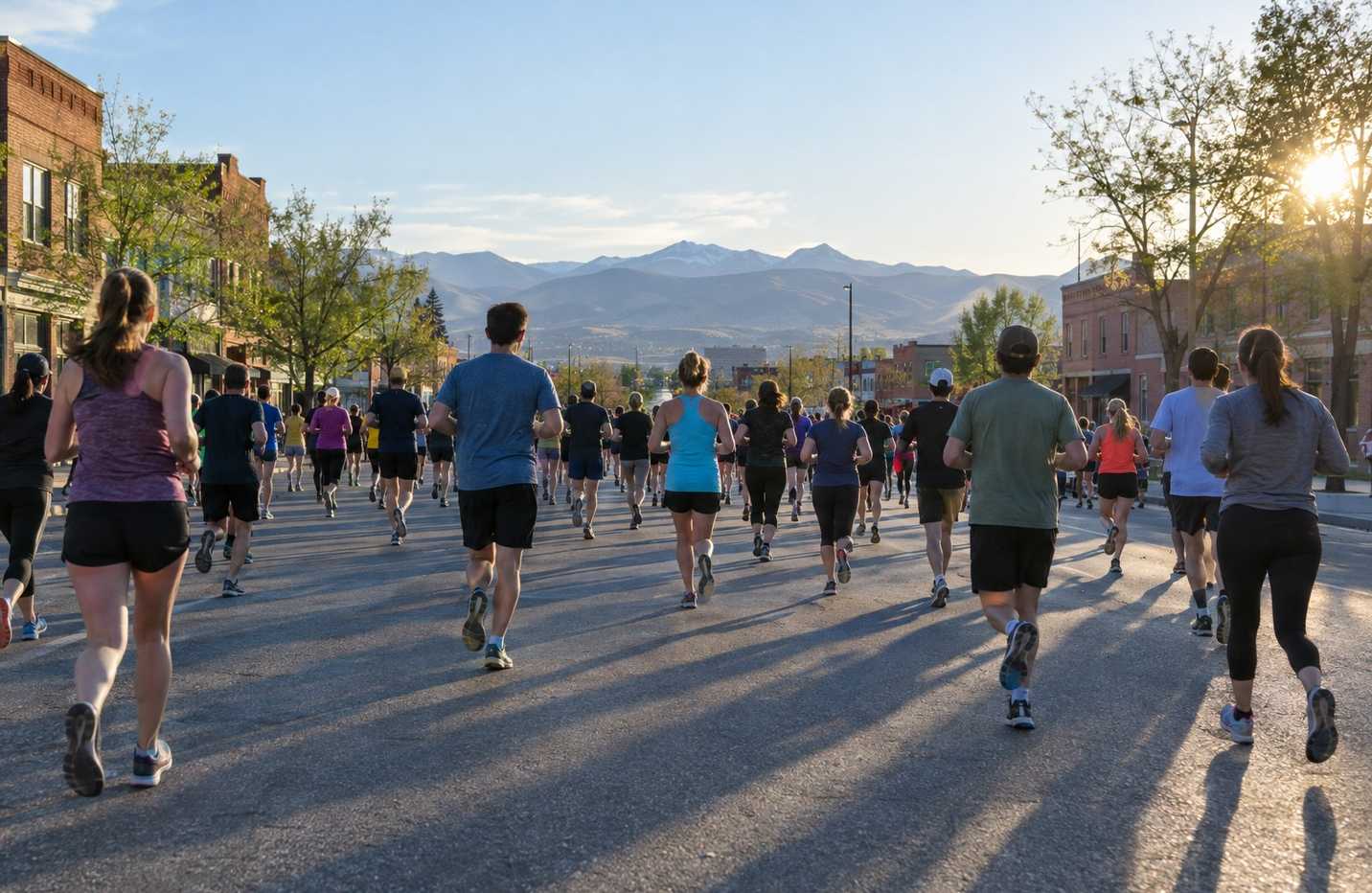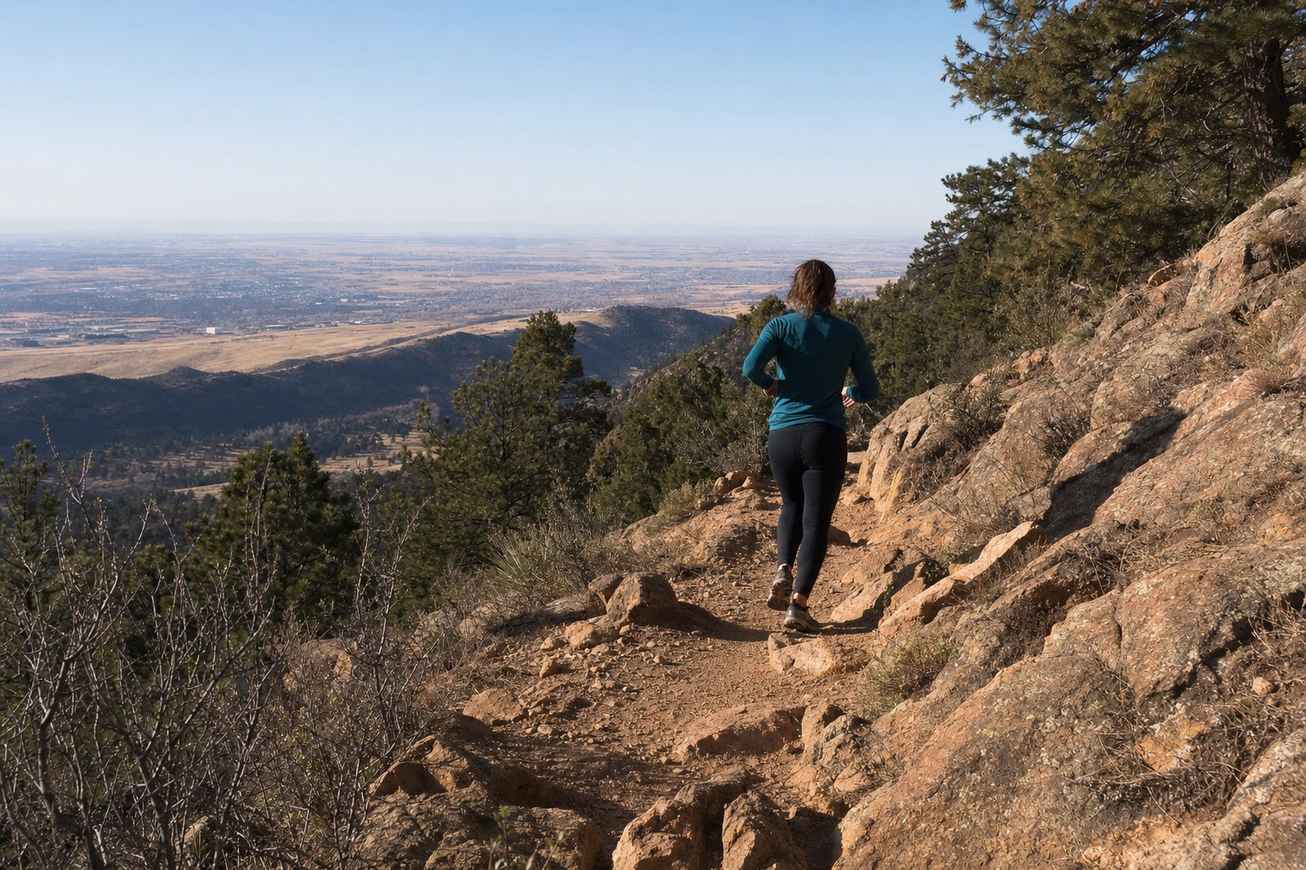
A Front Range March morning often starts on dry pavement under a clear, cold sky, the sun already sharp over the plains by mid-morning.
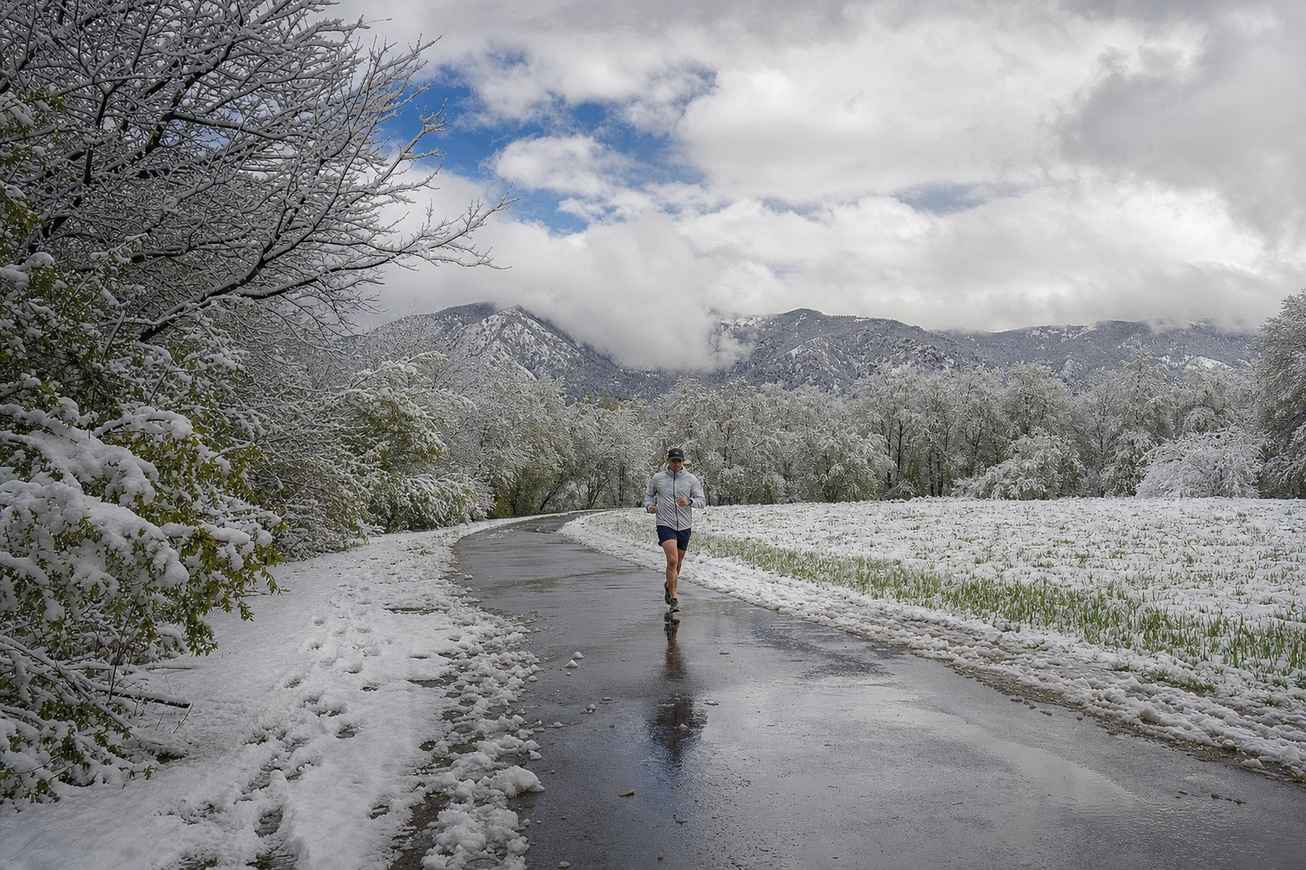
By the time the evening run happens, the sky can look nothing like it did at breakfast. The same stretch of sidewalk is slick under wet, heavy snow.
Spring on the Front Range doesn’t behave like spring most runners picture. Denver’s own weather records make the reversal plain, and the practical half follows from what’s actually in them.
Denver’s own snowfall data flips the seasons runners expect: spring, not winter, brings the most snow.
What the numbers say about March and April
The climate normals for Denver from NOAA, the US federal ocean and weather agency, point to something most runners don’t expect.
According to NOAA’s 1991-2020 climate normals for Denver:
- March averages 8.8 inches of normal snowfall, more than any other month of the year.
- January’s normal is 6.4 inches.
- December’s is 6.6 inches. Neither midwinter month comes close.
April keeps real snow too, at a normal 6.2 inches. March and April together bring more snow than December and January together. Spring outsnows what most runners picture as the snowy season.
March, not January or December, is Denver’s snowiest month on the books.
The three coldest months, December through February, still add up to more snow overall: 20.6 inches against March and April’s 15.0. But that’s an extra month of accumulation for a narrower margin than the reputation suggests.
March alone still beats any single winter month by a wide gap.
Across the full year, Denver’s normal snowfall totals 49.0 inches. March and April together account for close to a third of that total, packed into the two months most runners think of as spring.
December through May, month by month
The shift from December through May shows up clearly across NOAA’s Denver normals.
| Month | Snowfall (in) | High (°F) |
|---|---|---|
| December | 6.6 | 45.9 |
| January | 6.4 | 46.5 |
| February | 7.6 | 47.5 |
| March | 8.8 | 56.4 |
| April | 6.2 | 62.5 |
| May | 1.4 | 71.7 |
Snowfall climbs through the coldest months, peaks in March, and then drops off fast. Temperatures rise the entire time, so the coldest-feeling stretch on the calendar and the snowiest one don’t actually line up.
March and April together bring more snow than December and January together. Spring outsnows what most runners picture as the snowy season.
Denver’s snowiest month also carries a normal high in the mid-fifties.
A climate normal is a 30-year average, not a forecast. A given March can turn up dry, just as a given December can dump snow that skips the pattern entirely.
The normals describe what to plan for, not what any single morning will do.
Why March catches runners off guard
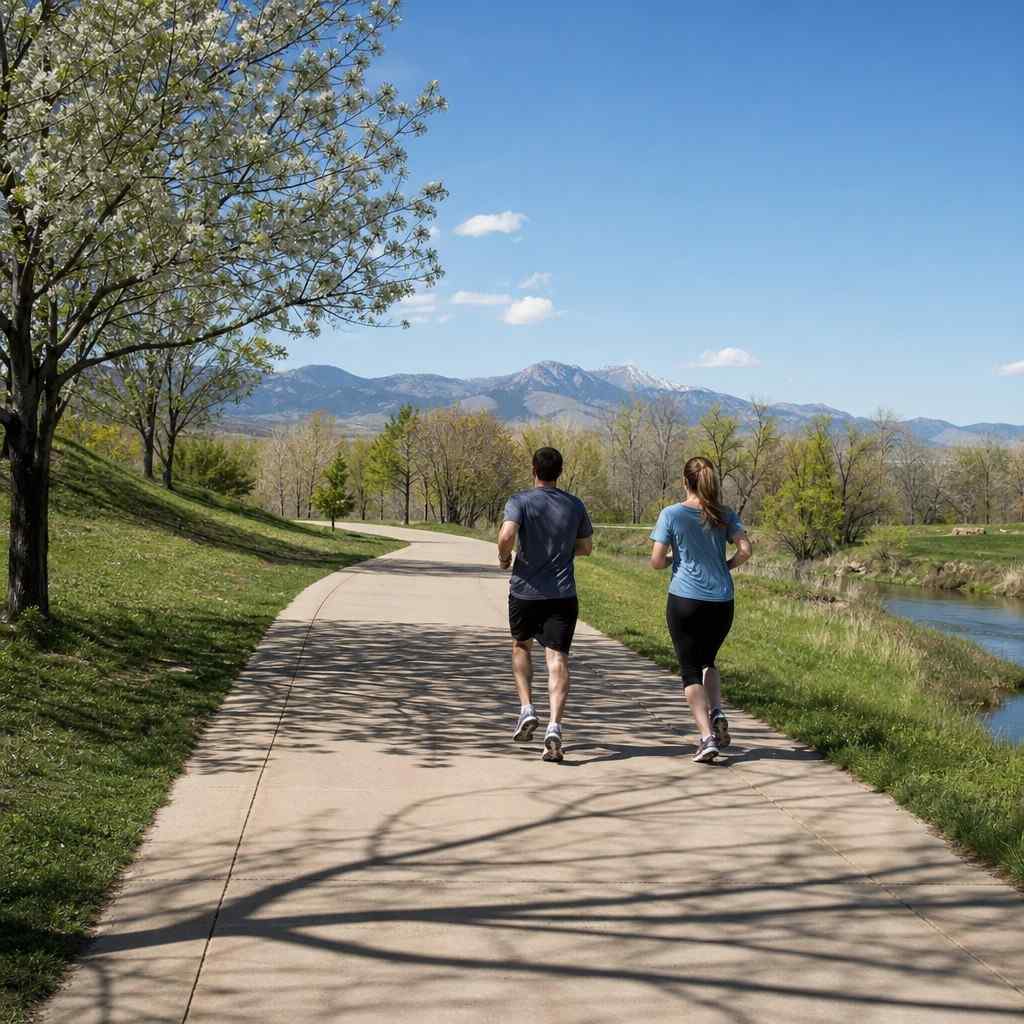
March’s normal high is 56.4°F. Its normal low is 27.1°F. That’s a swing of about 29 degrees between the coolest and warmest part of an average day. April runs almost the same spread, from 33.7°F up to 62.5°F.
Precipitation more than doubles from February’s 0.53 inches to March’s 1.12 inches. It keeps climbing through May’s 2.29 inches, the wettest month in the normals.
Twenty-nine degrees separates a normal March morning’s low from its afternoon high, and that’s normal here, not an outlier.
A run that starts near freezing can finish well into the fifties. A clear morning can turn into a wet one before the run is over, and the reverse happens too.
Front Range runners who’ve adjusted their layering through a Denver winter already have practice managing a swing like that. March just asks for it more often, and later in the day.
Layering for a swing like that
Two coats’ worth of temperature inside one run calls for gear that comes off easily and packs down small. One heavy layer sized for the coldest point of the route is the wrong tool.
Gloves, a hat, and a light shell handle most of a cold March start. By the time the normal high arrives, the same run might not need any of them.
Heavy coats sized for the coldest minute of a run become dead weight for the rest of it.
The specific fabric and layer choices for a swing like this are covered in what to wear running in Colorado, matched to Colorado’s actual temperature range across the year.
A few habits make the swing easier to plan around:
- A trailhead at 7 a.m. and the same trailhead at 10 a.m. can feel like two different seasons in March.
- Pack for the wider of the two temperatures, then shed layers as the run warms up.
- Check the morning’s starting temperature against the day’s expected high. In March, the two numbers can be 25 or 30 degrees apart.
When the ground turns to mud
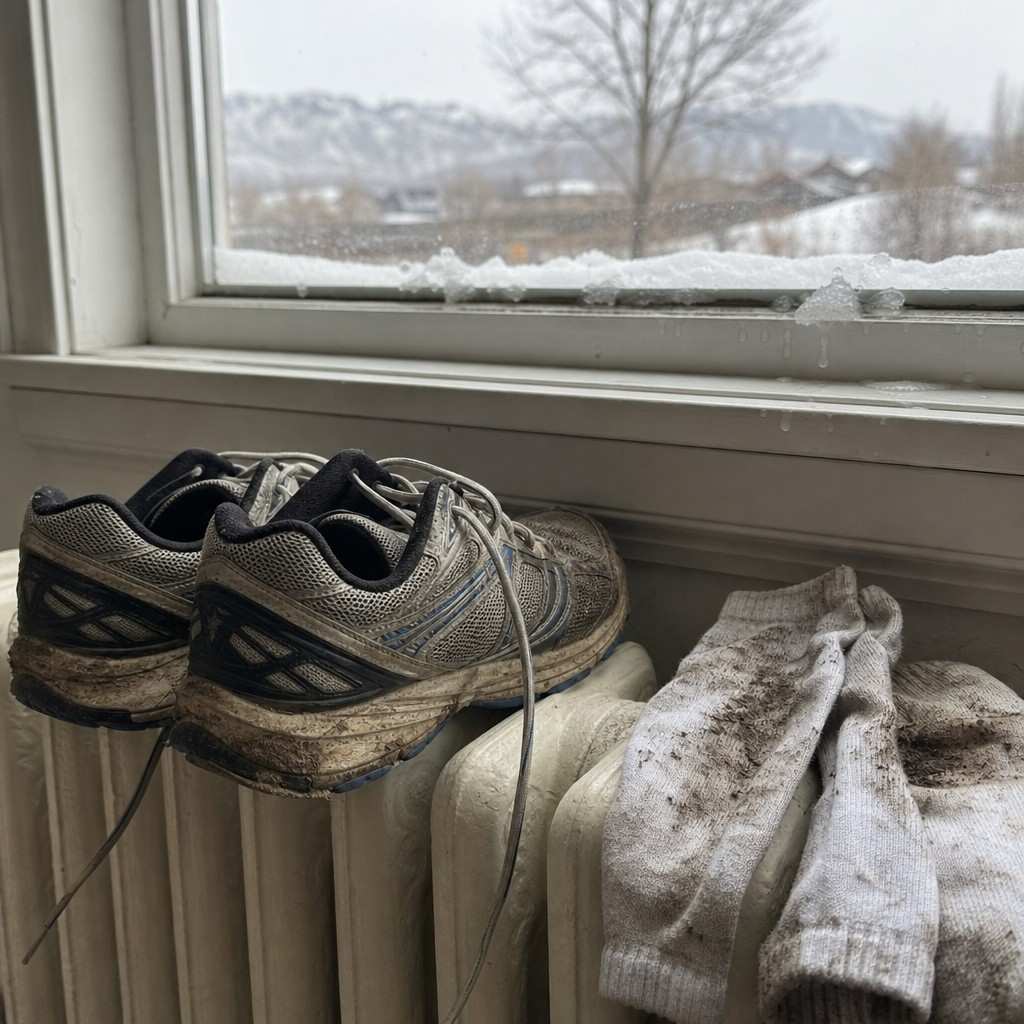
Melting spring snow turns unpaved trails to mud fast. A soft trail chews up quickly under running shoes, and it can stay unpleasant for days after the snow itself is gone.
Muddy trails are worth skipping in favor of pavement until they firm back up.
Some Denver routes and parks handle a wet spring far better than others, simply because of what they’re surfaced with.
Picking a spring race
March and April’s snow risk is a real scheduling factor, not just a wardrobe question, for anyone choosing a race on the calendar.
Pick a race by the season and the scene, not just the distance. A late-April race still carries real snow risk under Denver’s own normals.
A race scheduled for late May sits past most of it, both on snowfall and on temperature.
Late-April Front Range races still carry real snow risk on the numbers above; late May mostly doesn’t.
For someone weighing a first race, the calendar matters as much as the course.
The Front Range running calendar opens up in earnest once May arrives.
Waiting for the ground and the weather to cooperate is part of showing up ready, not an excuse to put it off indefinitely.
By May, normal snowfall drops to 1.4 inches, a fraction of March’s 8.8, and the normal high reaches 71.7°F.
April’s own precipitation normal, 1.67 inches, sits between March’s and May’s, part of the same steady climb toward the wettest month of the year. May’s precipitation peaks at 2.29 inches even as its snowfall falls to 1.4.
Most of that month’s moisture is arriving as something other than snow.
The Front Range running calendar opens up in earnest once May arrives. Snow is behind the season by then, and the normal high has climbed back into the low seventies.