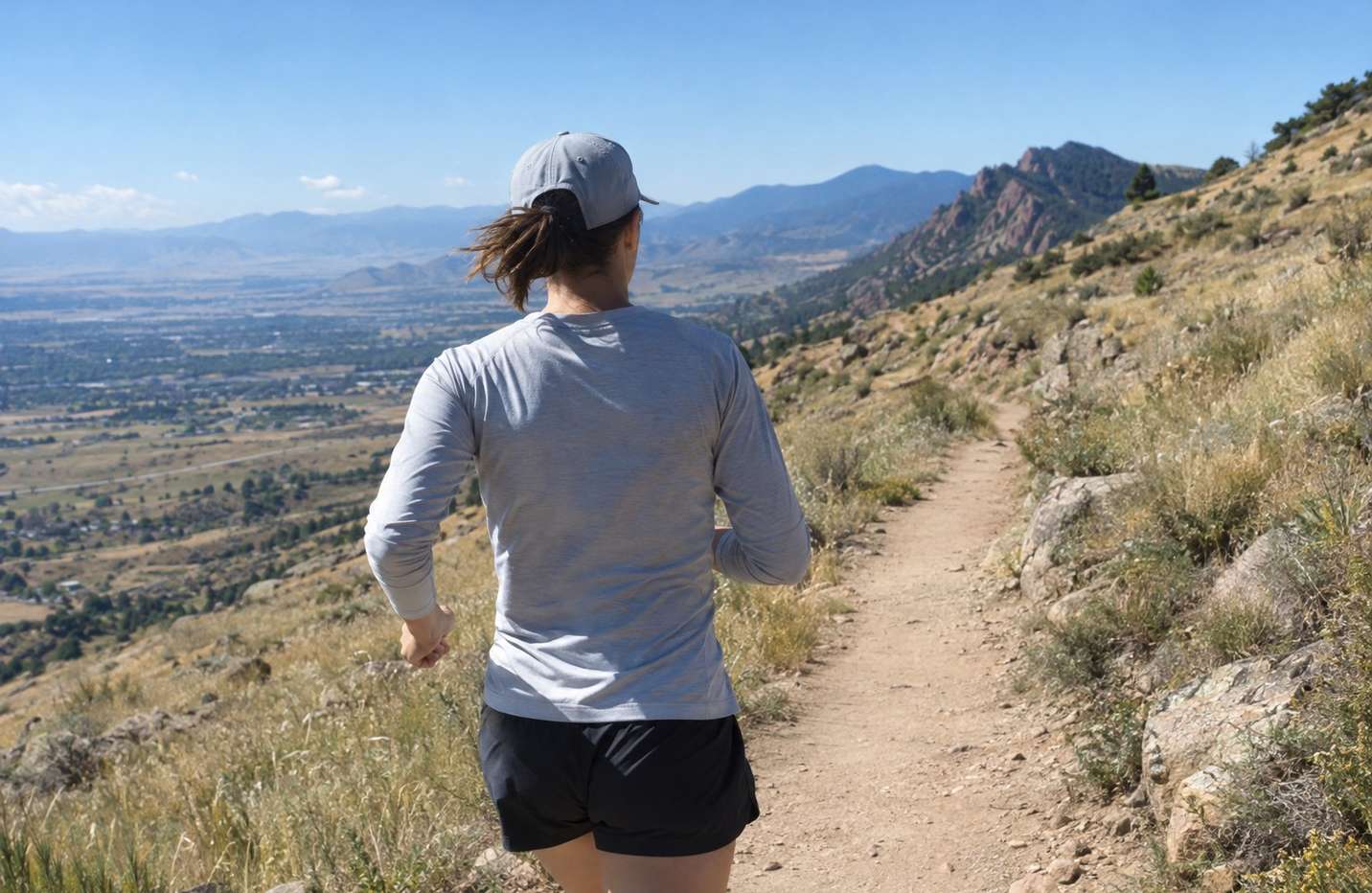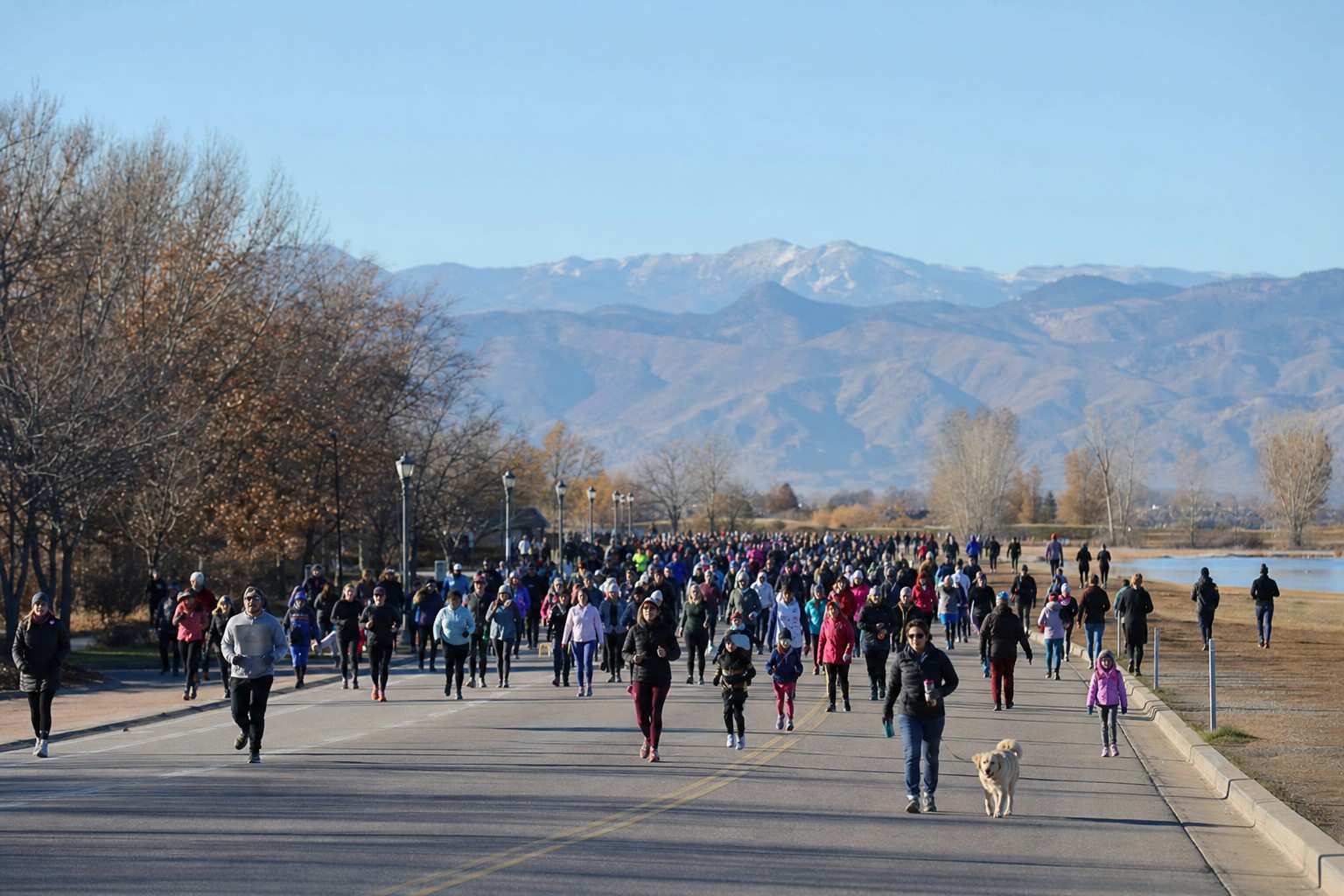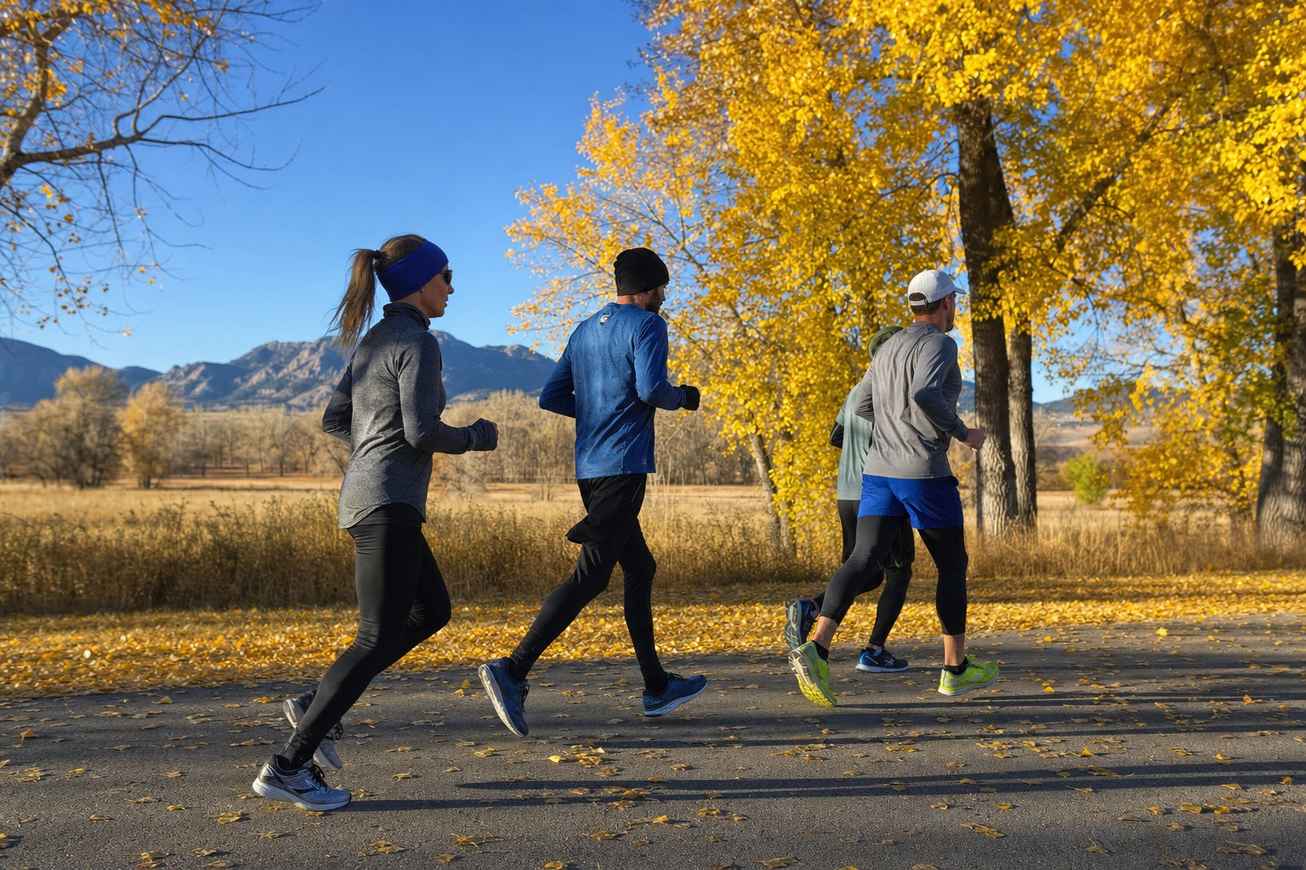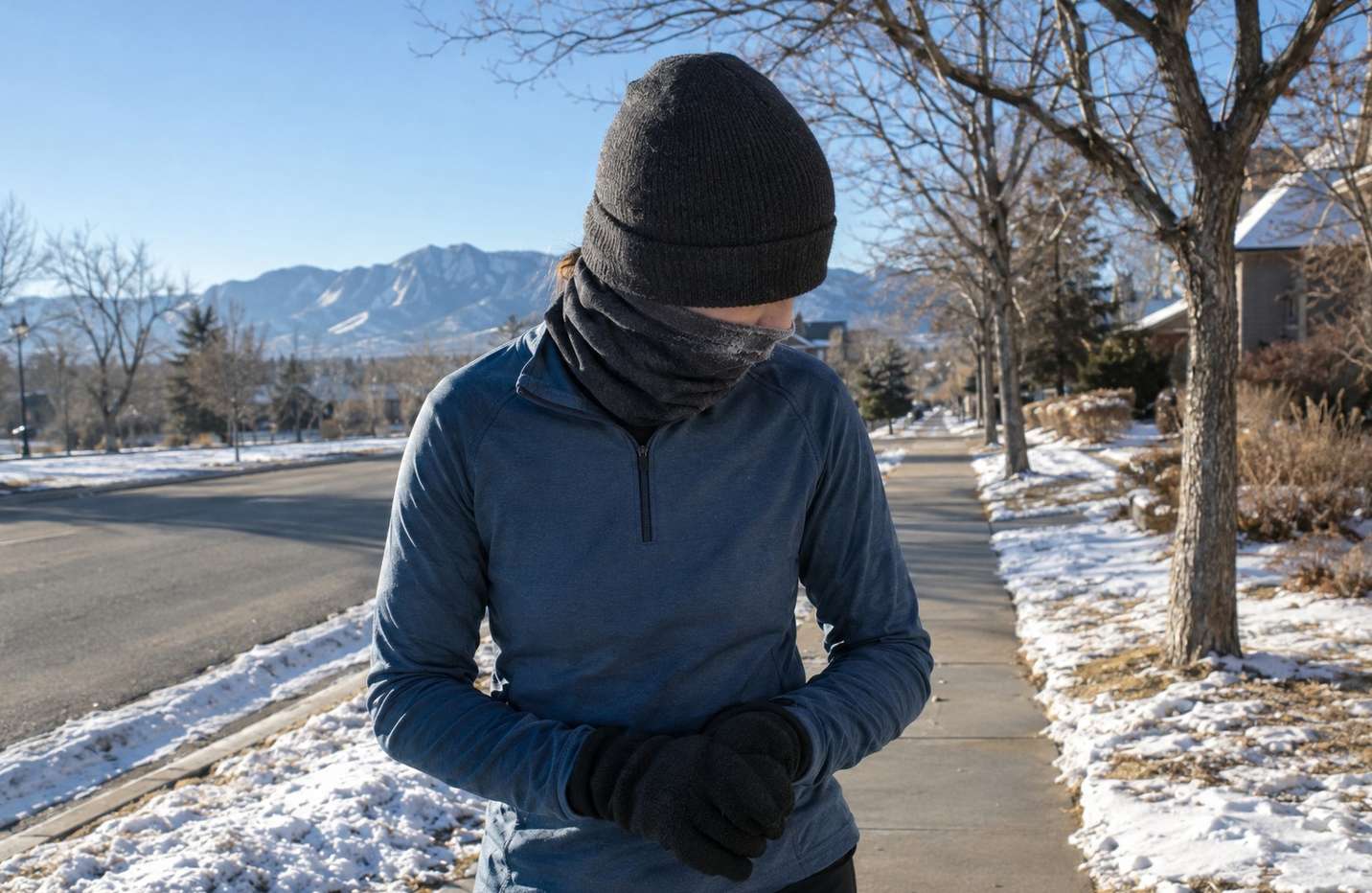
A Denver run in January can start in a hard, biting cold and finish in bright, warm sun.
Dress for the door and you’re carrying a jacket by the second mile. Dress for the finish and the first ten minutes are miserable.
That swing is the actual buying problem here.
Denver’s normal January high runs 44 to 45 degrees. Its normal low runs 18 to 19 degrees, a swing of about 26 degrees on an average day.
The gear that matters is different, and so is the order to buy it in.
That’s the National Weather Service’s own January climate record for the city, built from 1991 to 2020 data. It’s the reason no single jacket gets today’s run right.
The other half of the picture is that this cold is usually dry and sunny, not wet. Wind and exposed skin are the real problems in a Front Range winter, not bulk.
For the layering logic itself, what to wear running in Colorado covers the how. This page is about what’s worth buying to make it work, in the order it actually pays off.
Someone who grew up dressing for a wet, gray winter brings the wrong instincts here. The gear that matters is different, and so is the order to buy it in.
A jacket that goes on at the trailhead and comes off at the car isn’t built for this.
Each item below is judged on what its maker states and on Denver’s own January numbers.
Gloves or mittens
Fingers go first in dry cold, and gloves are the cheapest fix for the biggest problem.
A thin, wind-resistant pair beats a bulky insulated one for running. Your hands are already working, and a thick glove gets peeled off and stuffed in a pocket by mile two.
If cold reliably turns your fingers white, numb, or slow to warm back up, that’s worth mentioning to a doctor. A warmer glove doesn’t answer a circulation question.
A single midweight pair covers most of the season. On the coldest, windiest mornings, a thin liner underneath adds warmth without adding bulk to your grip.
The Brooks Momentum Thermal Hybrid Glove switches from glove to mitten when the wind picks up.
 Brooks Momentum Thermal Hybrid Gloves
Switches from glove to mitten
Brushed stretch knit with a water-repellent finish
Open the listing on Amazon
Some of the links on this page are affiliate links. If you buy something through one, Feat on the Street may earn a small commission at no extra cost to you. The full affiliate disclosure has the details.
A hat and something for your neck
The wind is what actually turns cold into a problem. At 0°F with a 15 mph wind, the chill drops to about -19°F, cold enough that skin can start to freeze within 30 minutes.
Most Denver winter mornings never come close to that. Covering your head, ears, and neck is mostly about comfort here, not real risk.
A hat and a neck gaiter do more for comfort than another torso layer, and both pack down to nothing.
A lightweight running beanie covers the ears without adding bulk. The Smartwool Merino Beanie is a thin merino knit with clean seams for a no-bulk fit. A gaiter you already own for skiing works fine for a run too.
 Smartwool Merino Beanie
Lightweight merino knit
Clean seams for a no-bulk fit
Open the listing on Amazon
On the windiest mornings, the same gaiter pulls up over your nose and mouth. That takes the edge off breathing in cold air without turning the run into a bigger production than it needs to be.
A shell you can carry, not just wear
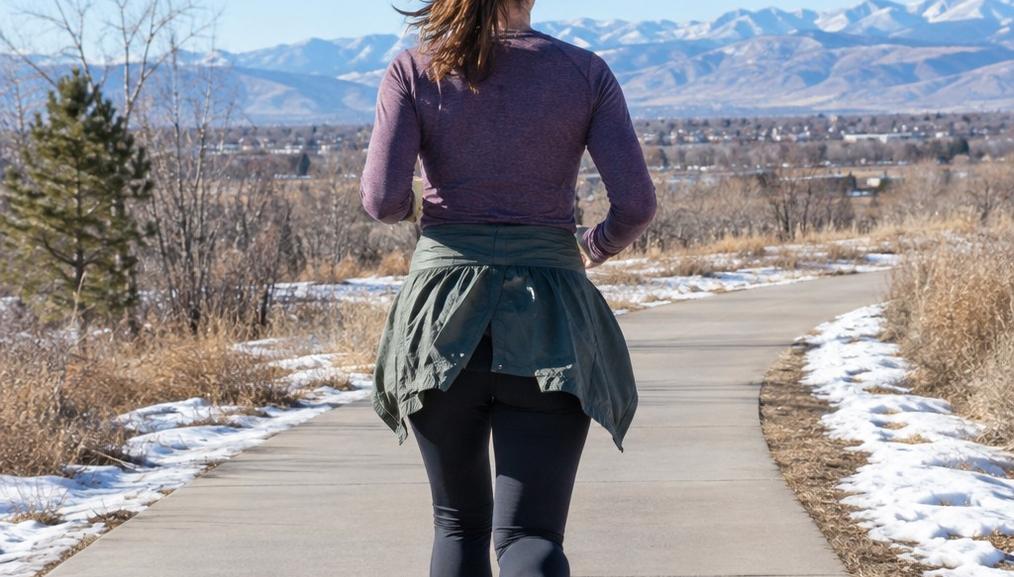
This is the swing item. A jacket that goes on at the trailhead and comes off at the car isn’t built for this.
Front Range weather turns fast; dress for the start line you’ll stand on, not the forecast high. That’s the whole argument for a shell over a coat.
Look for a wind-resistant shell that packs into its own pocket or ties around your waist, not one rated for standing still in the cold.
The Brooks Canopy Packable Jacket is that kind of shell. Brooks lists it as wind and water resistant, and it packs into its own hand pocket.
It comes in men’s and women’s versions.
 Brooks Canopy Packable Jacket
Wind and water resistant, UPF 50+
Packs into its own zippered pocket
Open the listing on Amazon
Men's
Women's
One pair of thermal tights
One pair of fleece-lined or brushed tights covers most of a Denver winter.
You don’t need a rotation. Save the cost of a second pair and put it toward gloves or a shell instead.
Look for a fleece-lined pair such as Baleaf’s thermal running tights. Baleaf rates the men’s pair for 20 to 50°F, and there is a women’s version too.
That’s the kind that works here, not a heavier double-layer pair built for far colder places.
 Baleaf Fleece-Lined Thermal Running Tights
Fleece lining, four-way stretch
Side pockets that hold a phone
Open the listing on Amazon
Men's
Women's
On a genuinely cold morning, a wind-resistant short worn over the tights does for your legs what the shell does for your torso. It blocks the wind, and it comes off easily once you’ve warmed up.
Traction for the ice you don’t expect
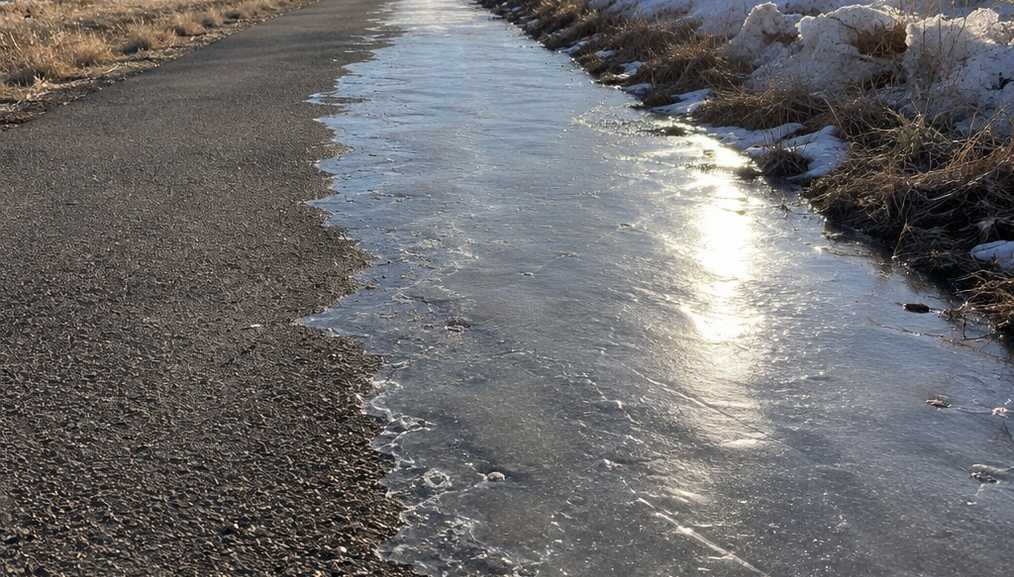
Front Range paths melt in the afternoon sun and refreeze overnight, so a trail can be dry pavement one day and ice the next.
That pattern runs well into March, the snowiest month here on average, which is covered in spring running in Denver.
Shaded stretches and north-facing turns hold ice long after the sunny parts of the same trail have already dried out.
A slip-on traction device, or a pair of trail shoes with real lugs, handles the ice most runners get caught without.
The Yaktrax Run is made for runners. Steel spikes and coils sit on a rubber frame that stretches over a running shoe. It’s the seasonal purchase most people skip, then regret on the first icy morning.
 Yaktrax Run Traction Cleats
Carbide spikes plus steel coils
Fits over running shoes, sizes S to XL
Open the listing on Amazon
For the rest of a Denver winter, pacing and ice navigation included, winter running in Denver covers the rest of it.
What you don’t need to buy
The most useful thing on this list might be what to skip.
Don’t buy a heavy insulated running jacket for Denver.
In a dry cold with a 26-degree swing built into an average day, you’ll overheat in it within a mile. Then you’re carrying it the rest of the run.
It’s the single most common wasted purchase for someone moving here from a wetter, colder place.
Four more things you can leave on the shelf:
- A dedicated winter running shoe. Traction you can add and remove beats a shoe built for one condition, and this season alternates between dry pavement and ice, sometimes in the same week.
- Base layers rated for standing still. Running produces its own heat, and a layer built for a ski lift line leaves you soaked in sweat by mile two.
- Heated gloves and battery-powered layers. Save those for days that are genuinely extreme, not the ordinary range this page is about.
- A balaclava or face mask. The gaiter you’re already carrying covers the same ground on the rare day that’s windy enough to want it.
And if the answer below a certain temperature is the gym or the treadmill, a lot of this list can wait.
There’s no gear that makes an unpleasant run mandatory.
Fingers are the first thing to go, and gloves are the cheapest item on this list. That is the order to buy in, and most winters it is the only purchase that gets used every single run.
Skip the heavy insulated jacket. It’s built for standing still in the cold, and a Denver run almost never asks for that.