March is the loudest month on Denver’s running calendar.
There’s green everywhere, one of the bigger St. Patrick’s Day parades in the country downtown, and a 5K or 10K most weekends around it. It’s a genuinely fun time to pin on a bib.
It’s also a deceptively hard month to race here, and the reasons have nothing to do with luck.
What a St. Patrick’s race in Denver is actually like

There are two flavors, and they ask different things of you.
- The downtown fun run. Costumes, crowds, a party atmosphere near the parade route. The point is the morning, not the time on the clock.
- The flat park 5K or 10K. Quieter, course-focused, the kind of race where a beginner can settle in and actually run their own pace.
If you’re new to racing, the flat park option is the kinder introduction. A good first 5K is one you show up trained enough to enjoy, not one you survive.
The two things that catch newcomers out
Altitude changes the math. Denver sits right around a mile up, and thin air costs you real seconds per mile, especially on anything longer than a 5K. If you moved here from sea level, your old pace is gone for a while. That’s normal, not a fitness problem.
Run by effort for your first few weeks of racing here. The watch will catch up to your legs.
Denver’s altitude changes how every race feels; pace by effort, not your sea-level numbers.
March weather doesn’t read the forecast. A start line in the third week of March can sit near freezing and the same race can finish in full sun twenty degrees warmer. Layers you can shed beat a single perfect guess.
Front Range weather turns fast; dress for the start line you’ll stand on, not the forecast high.
Picking your first one
Keep it simple. The two levers that decide whether a first race is fun are distance and terrain, and on St. Patrick’s weekend you have easy wins on both.
- Go short. A 5K is plenty for a first race, and the altitude punishes a 10K more than a flat course suggests.
- Go flat. A closed, level course through a city park is the friendliest ground there is. You can see the finish logic of the loop and you’re never fighting a hill on top of the air.
- Start at the back. The fast crowd goes out hard. Let them. You’ll pass people in the second mile who passed you in the first.
Still weighing the mile against the 5K or 10K? That choice matters more than it looks at altitude, and picking your St. Patrick’s distance walks through it.
A note on Lucky Laces
If you were racing in Denver in the late 2010s, you might remember Lucky Laces, a St. Patrick’s 5K and 10K held in City Park, with a separate Little Leprechaun run for the kids. Local outlets covered it at the time, and this site’s domain is where it once lived. It isn’t held anymore.
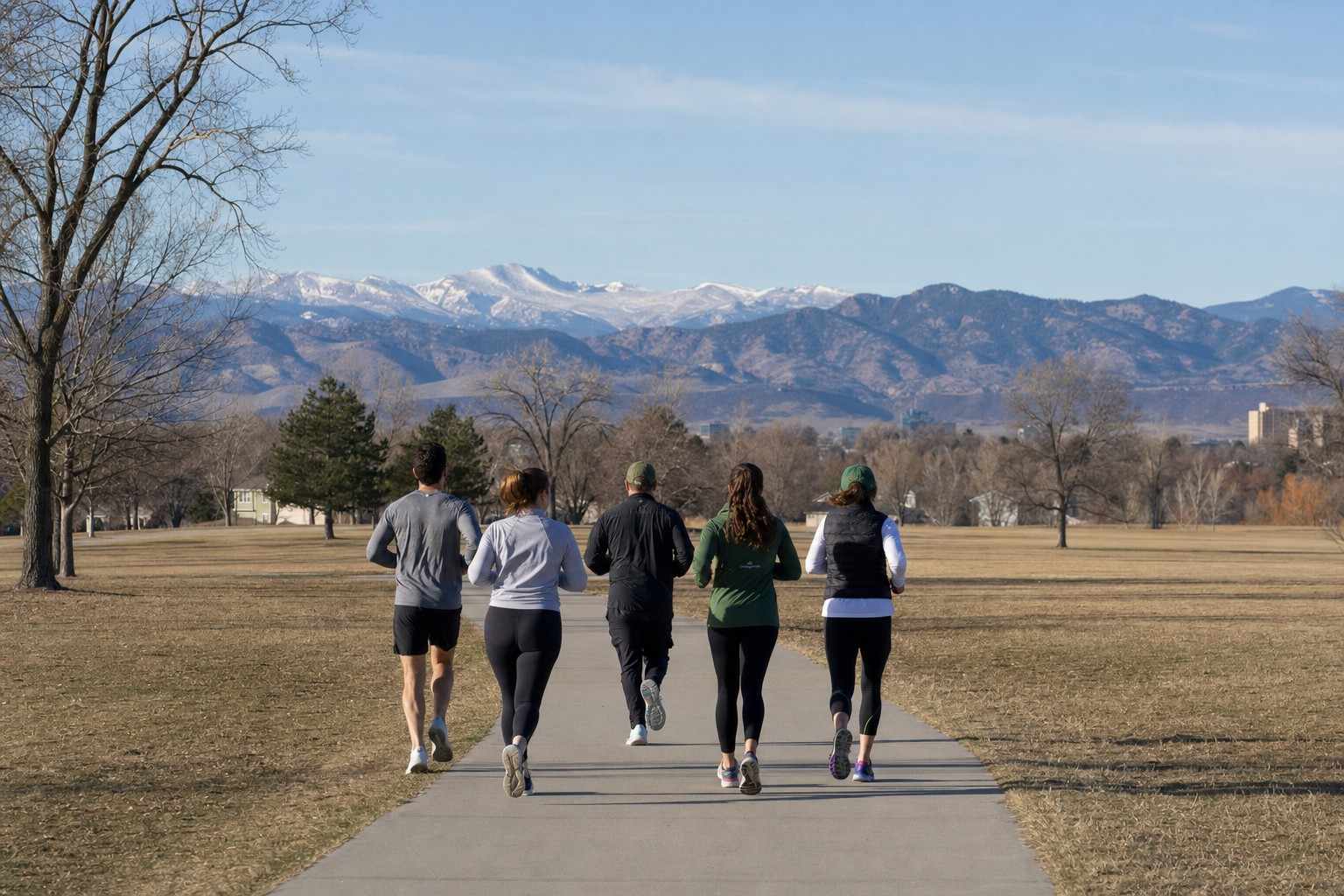
The reason it worked still holds: City Park is one of the flattest, most beginner-friendly places to race in Denver, a level loop with the mountains on the skyline. Plenty of races still use ground like it.
Finding this year’s races
Dates move every year, and St. Patrick’s races shuffle around the parade weekend, so a printed list goes stale fast.
For what’s actually on this year, check a current Colorado race calendar like the listings at Colorado Runner, which tracks Front Range races across the season. Then come back and pick by the season and the scene, not just the distance.
The takeaway
A Denver St. Patrick’s race is one of the best mornings in the local running year. Just respect the two things that make racing here different.
Run the early miles by effort, dress for the start line, and pick a flat, short course for your first one. Do that and the only thing left to manage is how much green you’re willing to wear.
For more on choosing a race that fits where you are, start with the Front Range race guides by season.