
Road running in Denver is forgiving. The park loops are flat, the trails are paved, the altitude is the only real variable. The foothills west of the city are something else entirely.
Trail running is a different sport from a park loop, and treating it like a longer version of your usual route is the most common mistake a Denver road runner makes.
Here’s what changes, and how to get started on the right foot.
The foothills start close
You don’t have to drive far. Golden and Morrison are the gateway to the front country, roughly 30 minutes from most of Denver, and the trailheads there lead into real terrain.
Areas like Green Mountain in Lakewood, Matthews/Winters Park near Morrison, Mount Falcon Park, and Apex Park near Golden offer everything from rolling singletrack to legitimate climbing. Red Rocks, the amphitheater you’ve probably seen, sits in the middle of actual trails worth running.
Boulder’s Flatirons and Chautauqua are another well-known option, a bit further north but with trails that are well-marked and well-trafficked.
All of these are beginner-accessible, which matters when you’re learning the terrain.
The difficulty is not what the map suggests
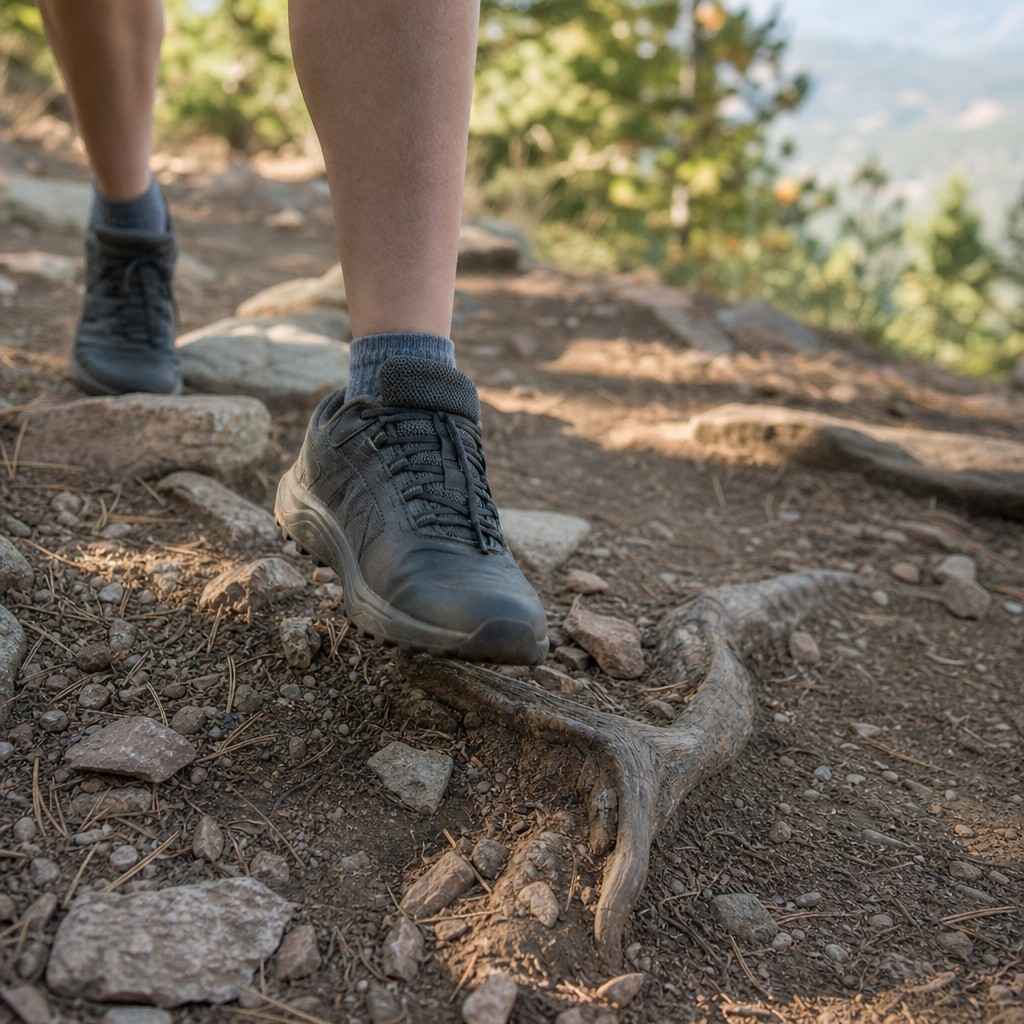
A trail that looks like a short run on a map often takes much longer than expected. You’re climbing. The footing is rocky. There are roots, loose rock, and sections where you’re essentially scrambling.
Train for the course you’ll run: hills, trail, and thin air are three different problems.
That line matters here. You’re dealing with all three at once when you run the foothills. The elevation gain is real. The altitude is higher than in the city. And the surface under your feet demands attention every step.
Don’t compare your trail pace to your road pace. It’s not a useful comparison.
Slow down, walk the steep parts
On trails, walking is not a sign of struggle. It’s standard technique.
Experienced trail runners walk steep uphills because hiking a climb at a fast walk is often faster than attempting to run it, and costs far less energy. You arrive at the top in better shape to keep moving.
Run by effort, not by pace. On a steep climb your heart rate will hit hard limits regardless of how slow you move. Back off to a walk, recover, and run the flatter ground.
If you’re used to running at altitude in Denver already, you know pace is a limited signal. That’s even more true on trail.
Watch your feet
This sounds simple and it isn’t. Road running trains you to look ahead. Trail running requires you to watch the ground a few steps in front of you.
- Rocks shift underfoot, especially dry loose ones.
- Roots are hidden under leaves and dirt.
- Wet rock, even on a clear day, can be slippery where a spring crosses the path.
A twisted ankle on a remote trail is a serious problem, and most ankle rolls happen in the first or last mile when attention drifts. Stay deliberate the whole time, even when you’re tired.
Mountain weather moves faster than city weather
Denver weather shifts quickly. Mountain weather shifts faster.
Afternoon thunderstorms build over the foothills with real speed in summer, and getting caught above treeline in lightning is genuinely dangerous. The practical rule is simple: start early and plan to be back at the trailhead by early afternoon.
Front Range weather turns fast; dress for the start line you’ll stand on, not the forecast high.
Check the forecast before you go, but also keep an eye on the sky while you run. Dark clouds building to the west are a signal to turn around, regardless of where you are in the run.
Carry your own water
Trailheads sometimes have water. Most trails do not.
The dry air at altitude dehydrates you faster than you expect, and a two-hour trail run demands more fluid than a flat city run of the same duration because you’re working harder. Bring more water than you think you’ll need, and don’t count on finding any on the trail.
A hydration pack or a handheld bottle with real capacity is worth the investment before your first real outing. You can read more about staying comfortable in unfamiliar terrain in where to run in Denver.
Start with shorter, well-trafficked trails
Your first few trail runs should not be solo adventures into remote terrain.
Busy, well-marked trails give you a few things: clear navigation so you don’t get lost, other runners around in case something goes wrong, and a shorter loop that lets you figure out your pace and effort before committing to a long day.
Green Mountain, Matthews/Winters, and the Red Rocks trails are good starting points because they’re well-known, well-trafficked, and have enough variety to teach you trail running without putting you in serious terrain.
Once you understand how the effort compares to road running, how mountain weather builds, and how your body handles the climb, you can push further.
Basic trail etiquette
A few conventions keep trail running pleasant for everyone.
- Yield to uphill runners. Someone grinding up a steep climb has earned the right of way. Step aside on the downhill.
- Stay on the trail. Cutting switchbacks damages the slope and widens the trail unnecessarily.
- Let faster runners pass. Step off and let them by rather than making them work around you.
None of this is complicated. The trail running community in the Front Range is generally friendly, and a quick acknowledgment goes a long way.
The takeaway
Trail running near Denver is one of the better things you can do with your legs, and the foothills are close enough to make it a regular option.
Go early, carry water, walk the climbs without apology, and watch your feet. Start on well-trafficked trails with a shorter effort, and let the terrain teach you before you push into bigger days.
If you’re new to the altitude side of this, your first month running in Denver covers the adjustment. Trail running makes that adjustment slightly harder because you’re climbing higher, so give yourself the same grace on the early runs.