
Most runners assume a 10K is just two 5Ks stitched together. At sea level, that’s a reasonable rough cut. In Denver, it undersells how much the distance changes things.
At altitude, the longer the effort, the more the thin air costs you. A 5K leans partly on fast-twitch effort that doesn’t depend heavily on oxygen. A 10K runs almost entirely on the aerobic system, which is exactly what altitude blunts most. The jump from 5K to 10K at a mile up is a bigger physiological step than the same jump would be at the coast.
That’s not a reason to avoid it. It’s a reason to prepare for the right race, not the one in your sea-level memory.
Why the 10K feels disproportionately harder here
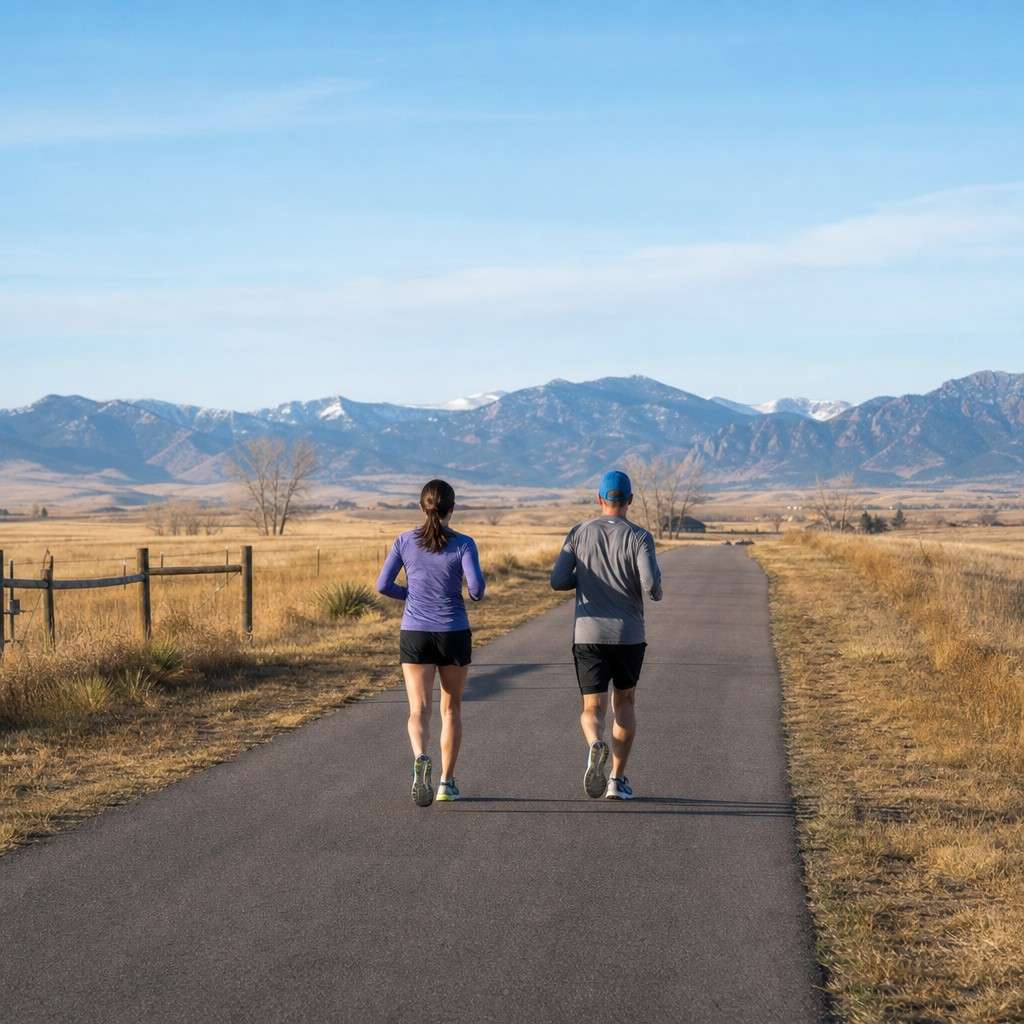
Your body carries oxygen through the blood. At 5,280 feet, the pressure pushing oxygen into that blood is lower than at sea level, so each breath delivers a little less than you’re used to. Sports-science research on altitude generally finds that aerobic performance starts to erode above a few thousand feet and keeps eroding the higher you climb.
Short, fast efforts hurt less because they lean on systems that don’t need much oxygen. Long aerobic efforts, like a 10K, lean almost entirely on the system altitude taxes hardest.
Train for the course you’ll run: hills, trail, and thin air are three different problems.
What this means in practice: your first 10K in Denver will likely feel harder in the second half than the same distance would at lower elevation, even if the first half felt fine. That’s not a wall. It’s the course.
Build your long run, but build it gently
Getting from a 5K to a 10K means extending your long run, which is straightforward but takes longer here than a sea-level plan suggests.
Since altitude costs you most on longer efforts, add distance more slowly than you might expect. A sea-level plan might push your long run up by a mile each week; here, smaller steps are smarter, especially in the first month of training.
Most of that long run should be easy. Easy means you could hold a conversation, not just survive the pace. Running easy isn’t a shortcut; it’s how your aerobic base actually grows.
A few principles that hold at altitude:
- Keep 80 percent of your running at a genuinely easy effort. This isn’t a figure that needs precision; the point is that most days should feel manageable, not hard.
- Add distance once, not twice, per week. One longer run per week. The rest of the week is recovery and easy mileage.
- Don’t stack hard days. A slightly harder tempo run and a long run shouldn’t be back to back, especially while you’re building.
Run by effort, not by your sea-level pace
If you’ve run 5Ks somewhere else, you have a sense of what your “comfortable” pace feels like. Leave that number behind.
Denver’s altitude changes how every race feels; pace by effort, not your sea-level numbers. Your easy pace here will be slower than the same effort was at the coast. That’s normal, and it’s not a fitness problem. Training by effort rather than target pace is how you avoid grinding yourself into the ground on runs that should feel easy.
You can read more about running by effort at altitude if you want the full picture. The short version: keep easy runs easy, and let your legs tell you what’s happening rather than chasing a number on your watch.
Pick a flat first 10K
Course choice matters more than most training plans admit.
A flat, closed-road 10K is a very different race from a rolling reservoir loop or a race that starts at 6,500 feet and climbs from there. Train for the course you’ll run: hills, trail, and thin air are three different problems, and a hilly or high-altitude 10K adds two complications to a race that’s already a step up.
For a first Denver 10K, flat is kind. The Front Range has courses that fit this, especially in Denver proper. Look at the race guides by season to find options that match the time of year you’re targeting.
One more thing: elevation at the start line matters. A race at Denver’s 5,280 feet is one thing. A race that starts higher, near Breckenridge or on a mountain course, is a harder ask for a first attempt.
Fueling and hydration for the longer distance
A 5K doesn’t ask much of your fuel stores. A 10K starts to. The combination of a longer effort and Denver’s dry air means hydration matters more than you might expect.
Drink before the run, not just during it. Arriving at the start line already slightly dehydrated is a common mistake in a dry-air climate, and it shows up in the second half of a 10K. The thin air means you lose more water through breathing than you would at sea level.
More on staying hydrated when running at altitude if you want specifics. The short version is that thirst is a lagging indicator here; by the time you’re thirsty on a run, you’re already behind.
For the race itself, most 10Ks have water stations on the course. Use them, even if you don’t feel like you need to.
Race day: start conservative
The most common mistake in a first 10K is going out too fast. This is true everywhere; it’s more punishing at altitude, where the back half of the race hits harder.
Go out at a pace that feels almost too easy for the first mile. If you feel strong at the halfway point, pick it up slightly. If you feel the altitude in the back third, you’ll be glad you held back.
The goal of a first 10K isn’t a time. It’s finishing strong enough that the distance doesn’t feel like a ceiling.
The runners who have the best first 10Ks are the ones who let the back half come to them. Denver’s altitude will do its work; your job is to stay in the race long enough to find out what you’re actually capable of.